Kyoto or Osaka base: compare the exact route
Checked against 16 official sources. 10 minute read.
What to know first
Base yourself in the city where you'll spend most days. Kyoto and Osaka stations are only 28 minutes and ¥580 apart by JR Special Rapid, so a day trip either way is easy. If your days are evenly split, look at the extras. USJ, Kansai Airport (KIX), Nara by JR and late nights out all favour Osaka. Early-morning Kyoto temples and three or more Kyoto days favour Kyoto. In our 5-night example below, an Osaka base saves about ¥2,300 in train fares (¥3,300 with accommodation tax) and about 35 minutes per person. That's too small to beat being where you want to wake up.
Conditions to check
- Match the station to your destinations. JR serves Kyoto Station; Hankyu links Osaka-Umeda with Karasuma and Kyoto-Kawaramachi. Those are different starting points for your day.
- After an evening out, mind the last train: on our sample weekday (15 October 2026) the last JR Special Rapid left Osaka at 00:00 and reached Kyoto at 00:30.
- Include the airport trip, hotel walk and any luggage or late-check-in arrangement that could change the choice.
- If both hotels meet your needs, use your own price and stay preferences to decide; if neither works, reconsider the areas or the wider plan.
- JR Kyoto ⇄ Osaka (Special Rapid)
- 28 min · ¥580
- JR Osaka → Universal City
- 14 min direct · ¥200From Kyoto: 54 min, 2 changes · ¥840
- Kyoto → KIX, HARUKA reserved
- 75–84 min · ¥3,590
On this page
A practical comparison sheet, not a fixed ranking
Record the same checks for both candidates
Choose Pass only when the exact dated chain meets your declared limit. Choose Fail only when current evidence proves that it does not. Everything missing, stale, conflicting or still awaiting confirmation from the responsible provider stays Unknown.
On a narrow screen, swipe the table sideways to see both candidates.
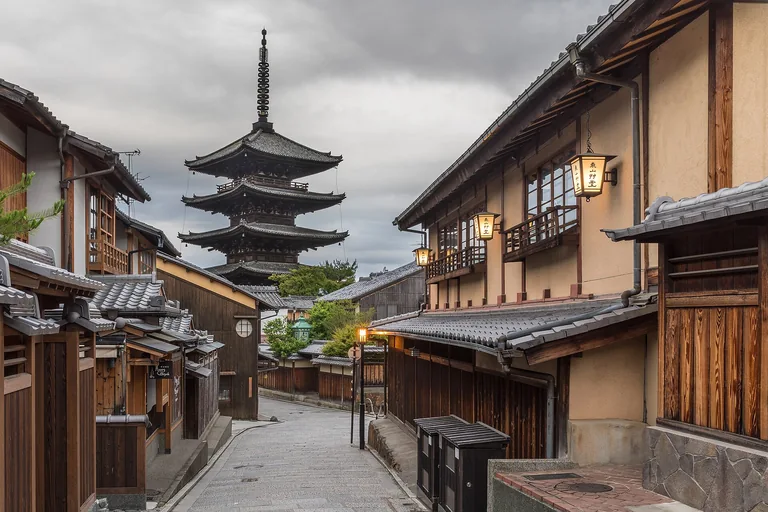
,_Kyoto,_Japan.jpg)
Conditions that change the answer
- Best for
- Travelers whose nationwide itinerary is already narrowed to one base and one exact catchment area per city
- When it's not worth it
- You still need to decide on your number of bases, an open-jaw route, a split stay, or another destination—or you need live hotel availability, rates, or rankings.
Choose by traveller type
- Decision order
- Choose one Kansai base -> define exact catchments -> verify transit both ways -> apply current guide and provider overrides -> select candidate, resolve ties, or return to the first-trip base guide
- What standard booking listings miss
- A city pin or map estimate won’t show you the actual station entrances, walking distances inside stations, real-time delays, last train times, hotel policies, or your personal travel stamina.
What a hotel candidate means
Candidate never means booked, available, cheapest, fastest, quieter, safest or best.
Scope and required inputs
Start here only after the first-trip hotel-base guide has narrowed the question to one Kansai base. That guide still covers open-jaw shape, base count, split stays and other regions.
A hotel catchment refers to the immediate area around your hotel and its primary station entrance or exit. A gateway is your arrival or departure airport terminal or main train station. A fixed visit is any location you must reach on a specific date within a fixed time window.
Set realistic personal limits for door-to-door travel time, transfers, and walking minutes, along with your earliest departure, latest return, and needed rest breaks. Assess trips with luggage separately from hands-free travel. These serve as baselines to help you test what works for you, rather than official route recommendations for Kyoto or Osaka.
- one candidate hotel in Kyoto and one in Osaka, compared to choose a single Kansai base;
- Arrival and departure airports, terminals or stations, with travel dates and realistic buffers for arrival;
- every fixed-date visit, exact entrance, and acceptable arrival or departure cutoff;
- every outward and return route, operator, transfer and station movement;
- Your personal limits for one-way transit, transfers, walking, early starts, late returns, and recovery time;
- your current luggage situation and whether you need to stick to a single base;
- Facility-confirmed policies on accessibility, children, sensory needs, temporary closures, or late arrivals that could affect feasibility.
A missing critical input remains Unknown and the result stays Unconfirmed — please don’t assume.
Which base fits your days?
If columns are cut off, scroll sideways. Keyboard: focus the table, then use Left/Right Arrow keys.
| If your plan looks like this | Base and why |
|---|---|
| 3 or more full days in Kyoto, or you want temples before 08:00 | Base in Kyoto. Each Kyoto day from Osaka adds two 28-minute JR rides plus the bus or subway from Kyoto Station. |
| A USJ day, especially with early entry | Base in Osaka (Umeda/Osaka Station or the Yumesaki Line). Osaka to Universal City is 14 minutes direct for ¥200; from Kyoto it's 54 minutes with two changes for ¥840. |
| Flying out of KIX early in the morning | Base in Osaka, or Namba for the Nankai line. Namba to KIX is 34–39 minutes by rapi:t (¥1,670); Kyoto to KIX is 75–84 minutes by HARUKA (¥3,590 reserved). |
| Evenings in Dotonbori or Umeda are a priority | Base in Osaka. The last JR Special Rapid back to Kyoto left Osaka at 00:00 on our sample weekday, so a Kyoto base works, but it's a hard stop. |
| Nara is your only side trip | Either city. JR Kyoto to Nara is about 45 minutes (¥720); JR Osaka to Nara about 50 minutes (¥840), or Kintetsu from Namba about 40 minutes. |
| Days split evenly, no USJ, flying home from Tokyo | Base in Kyoto. You'll take the Shinkansen from Kyoto anyway, and the cost difference is small (see the worked example). |
| You want one hotel for the whole Kansai stay and can't decide | Kyoto or Osaka, near the JR station. Being close to the station matters more than the city: Kyoto Station and Osaka/Umeda both put every trip here one train away. |
Our judgement. Fares and times are from JR West My Dia, Nankai, Kansai Airport and Nara City Tourism (see the key facts).
Worked example: 5 nights in Kansai, two ways
The plan: two Kyoto sightseeing days, one USJ day, one Nara day, one evening in Osaka, then a flight home from KIX. One adult, hotel next to the main JR station in each case. Times are time on the train, from JR West My Dia (sample date 15 October 2026) unless stated.
If columns are cut off, scroll sideways. Keyboard: focus the table, then use Left/Right Arrow keys.
| Trip | Kyoto base (near Kyoto Station) | Osaka base (near Osaka/Umeda Station) |
|---|---|---|
| 2 Kyoto days | ¥0 · 0 min | 4 × ¥580 = ¥2,320 · 4 × 28 min = 112 min |
| USJ, return | 2 × ¥840 = ¥1,680 · 2 × 54 min = 108 min (2 changes each way) | 2 × ¥200 = ¥400 · 2 × 14 min = 28 min |
| Nara, return (JR) | 2 × ¥720 = ¥1,440 · about 94 min | 2 × ¥840 = ¥1,680 · about 100 min |
| Osaka evening | 2 × ¥580 = ¥1,160 · about 58 min | ¥0 · 0 min |
| To KIX | HARUKA ¥3,590 · 75–84 min (or Special Rapid + Kansai Airport Rapid ¥1,860 · about 1 h 46 min) | Kansai Airport Rapid ¥1,180 · 65–71 min |
| Train total | ¥7,870 · about 5 h 45 min (¥6,140 with the slower airport train) | ¥5,580 · about 5 h 10 min |
| Accommodation tax, 5 nights at ¥12,000 per person per night | Kyoto ¥400 × 5 = ¥2,000 | Osaka ¥200 × 5 = ¥1,000 |
| Difference | Osaka is about ¥3,300 cheaper and 35 minutes shorter (about ¥1,560 with the slower Kyoto airport train) |
What it means: across five nights, the gap is about the price of one lunch. Swap the USJ day for a third Kyoto day and the result flips: the Osaka base then pays another ¥1,160 and 56 minutes, and loses its USJ saving. So decide on your mix of days, not on price.
Not counted (both bases): buses and subways inside Kyoto. From an Osaka base you arrive at Kyoto Station and still need them. Hotel room rates differ more than any of the figures above, so compare those for your dates. Tax rates are Kyoto City's (from 1 March 2026) and Osaka Prefecture's (from 1 September 2025); the arithmetic and conclusion are ours.
Compare exact travel zones, not just city names
Anchor each candidate to the station, line, exit or entrance you would really use. Kyoto Station, Karasuma/Kawaramachi and Gion-Shijo create different route shapes. Osaka/Umeda, Shin-Osaka, Yodoyabashi, Namba and Tennoji do too. These examples identify different catchments; they do not rank them.
- Identify the hotel area and the station or entrance you would actually use.
- Record every operator and transfer needed for the exact trip chain.
- Apply the traveler's stated limits equally to both options.
- Keep the comparison unconfirmed if either location is still defined only by a broad city name.


The concourse and soaring roof inside Kyoto Station · 2024


The Umeda skyline beyond the Yodo River in Osaka · 2024
Check transport hubs and scheduled activities both ways
- Check the route from your arrival point to your lodging area, and from your lodging area to your departure point.
- Check transit routes from your base to every planned stop, including the journey back.
- Include station movement, transfers and every operator in the chain.
- If returning late, check the exact last service for your date alongside live transit updates.
- Base this on your own travel limits; there is no one-size-fits-all threshold.
A scheduled search result is a planning input, not guaranteed operation or connection success. A facility's opening hours do not guarantee entry.
Check factors that could change your plans
If columns are cut off, scroll sideways. Keyboard: focus the table, then use Left/Right Arrow keys.
| Guide or provider | Condition to check | If unresolved |
|---|---|---|
| Late Arrival | Current constraints for airport-to-first-night travel or late returns. | Pause the comparison and use the late-arrival guide to resolve it. |
| Luggage | Carry on person, confirmed luggage forwarding, confirmed baggage storage, or unresolved. | Plan to carry the bags until forwarding or storage is confirmed. |
| Holiday / disruption | The latest dated verification on closures, alerts, or operator changes. | Pause comparisons for the affected route. |
| Attractions | Confirmed visit plans, entrance points, reservations, and current facility conditions. | Pause the comparison for that day until the reservation is confirmed. |
| Hotel operator | Current check-in, checkout, cancellation and baggage conditions. | Confirm check-in, checkout, cancellation, and luggage storage directly with your hotel. |
Budget for local hotel taxes too: see accommodation tax and other hotel charges for per-person rates by city, including the top Kyoto rate of ¥10,000 a night.
If both work, or neither does
- Review your base plan when the first-trip base plan has not fixed the one-base Kyoto/Osaka scope.
- Keep your booked base and double-check transit times when a traveller-declared fixed base remains non-flexible and its critical routes and provider terms are current and feasible.
- Unconfirmed — please don’t assume when a critical source, catchment, threshold, booking, luggage, hotel or gateway input is missing, stale or conflicting.
- Kyoto base candidate or Osaka base option only when that exact catchment passes every required check and the other is fully checked and fails. If the other remains Unknown, resolve it before selecting between the two.
- Traveler tie-break needed when both exact catchments pass the same checks; retain both without an editorial winner.
- Return to the first-trip base guide when both are fully checked and neither passes. This comparison does not choose a split stay or another region.
Key facts: times, fares and taxes
Checked on 11 October 2026
If columns are cut off, scroll sideways. Keyboard: focus the table, then use Left/Right Arrow keys.
| Fact | Value | Source |
|---|---|---|
| JR Kyoto ⇄ Osaka (Special Rapid) | 28 min · ¥580 | JR West My Dia |
| JR Osaka → Universal City | 14 min direct · ¥200 | JR West My Dia |
| JR Kyoto → Universal City | 54 min, 2 changes · ¥840 | JR West My Dia |
| Kyoto → KIX, HARUKA reserved | 75–84 min · ¥3,590 | KIX train access; JR West My Dia |
| Osaka → KIX, Kansai Airport Rapid | about 65–71 min · ¥1,180 | KIX train access; JR West My Dia |
| Namba → KIX, Nankai rapi:t | 34–39 min · ¥1,670 | KIX train access; Nankai |
| JR to Nara | from Kyoto about 45 min · ¥720; from Osaka about 50 min · ¥840 | Nara City Tourism Association; JR West My Dia |
| Last JR Special Rapid Osaka → Kyoto (sample weekday) | 00:00, arriving 00:30 (for 15 October 2026) | JR West My Dia, last-train search |
| Accommodation tax at ¥12,000 per person per night | Kyoto ¥400 · Osaka ¥200 | Kyoto City; Osaka Prefecture |
JR fares and times are one adult, regular season, from JR West My Dia for Thursday 15 October 2026. Recheck last trains after the March 2027 JR timetable revision.
Your next step
- Write each Kansai day as Kyoto, Osaka, USJ, Nara or airport.
- Count them against the chooser. If Kyoto days outnumber Osaka and USJ days, start your hotel search within a 10-minute walk of Kyoto Station (or Gion-Shijo or Karasuma if you'll mostly be in central Kyoto). Otherwise, search near Osaka/Umeda Station.
- Check one last train for your latest night out: in JR West My Dia, choose the last-train search (終電検索), enter Osaka to Kyoto and your date.
Kyoto or Osaka: which base fits a first Japan trip?
Is Kyoto or Osaka a better base for a first Japan trip?
For most first trips that are mainly sightseeing, Kyoto, because the temples and old streets are the main draw and you avoid two train rides a day. Choose Osaka if your plan includes USJ, an early KIX flight or several evenings out. The two stations are 28 minutes and ¥580 apart by JR, so either city works as a day trip from the other.
Should families stay in Kyoto or Osaka?
If USJ is on the list, Osaka. Osaka Station → Universal City is one 14-minute train (¥200 adult, ¥100 child). From Kyoto it's 54 minutes with two changes, which is hard with tired children at night. Otherwise choose the city with more of your days, and pick a hotel within a short walk of Kyoto Station or Osaka/Umeda so every trip starts with one train. Children 6–11 pay the child fare, half the adult fare on these JR routes.
Is Osaka a better base if USJ is a major part of the trip?
Yes, for one or more USJ days. The trip is 14 minutes from Osaka Station without a change, against 54 minutes and two changes from Kyoto. The latest connection from Universal City back to Kyoto on our sample weekday leaves at 23:37, so a Kyoto base still works for a single USJ day if you're happy with the longer ride.
Should I split my stay between Kyoto and Osaka?
Only if you have 5 or more Kansai nights and a clear Osaka block (USJ, then KIX). A split costs about half a day for the hotel change. With a Kyoto-only plan plus one Osaka evening, stay put: the evening costs ¥1,160 return and about an hour on the train. For the full rule on how many bases, see our guide to where to stay on a first Japan trip.
Read next
Sources and how this guide was checked
About this guide
Compare the station or district you would actually use in each city. A city name is not a route result.
Official sources and what each confirms
Official sources and coverage limits
The records below are the official route, fare, tax and operator sources behind this guide; the JR fares, airport trains, Nara access and accommodation taxes were checked on 11 October 2026. Seat, traffic, room, luggage capacity, walking speed, station transfer duration and connection success remain Unknown until the responsible owner confirms the exact scope.
- Kyoto City Tourism Association: getting to Kyoto
What this confirms: This guide categorizes JR, Hankyu, and Keihan routes by transit operator and destination station. Please note that the referenced travel times are estimates and do not guarantee exact door-to-door transit schedules or last-train departures for specific dates.
Last checked - Kyoto City Tourism Association: subway and train guide
What this confirms: This guide outlines transport options to Kyoto Station, downtown, and top attractions across major transit operators; please check each operator directly for real-time service schedules.
Last checked - Osaka Convention & Tourism Bureau: around Kansai
What this confirms: The guide orients travellers to named Kansai access choices from Osaka; it does not by itself show one best base or an exact current itinerary.
Last checked - Osaka Metro: route search tips and practical limitations
What this confirms: The route finder uses scheduled timetables rather than live service updates, may omit some routes, and cannot guarantee transfer times for individual passengers.
Last checked - JR West: travel information and service status
What this confirms: JR West provides its own route, timetable, and live operating information; other transit operators, station transfers, and hotel access require their own schedule checks.
Last checked - Kansai International Airport: access FAQ
What this confirms: KIX identifies access modes and directs exact train or bus details to the relevant operator; it does not by itself show later connections or hotel check-in.
Last checked - JR West: My Dia timetable and fare search (Japanese)
What this confirms: Sampled for Thursday 15 October 2026 (one adult, regular season, base fares): JR Kyoto ⇄ Osaka Special Rapid 28 minutes, ¥580; Osaka → Universal City 14 minutes, ¥200; Kyoto → Universal City 54 minutes with two changes, ¥840; Kyoto → Nara ¥720 and Osaka → Nara ¥840; Osaka → Kansai Airport ¥1,180; HARUKA Kyoto → Kansai Airport ¥3,590 reserved. The last weekday Special Rapid from Osaka to Kyoto left at 00:00, arriving 00:30. A sample date is not a timetable guarantee.
Last checked - Kansai International Airport: train access
What this confirms: Kansai Airport gives typical times of about 34–39 minutes to Namba by Nankai rapi:t, about 65 minutes to Osaka by JR Kansai Airport Rapid and about 75 minutes to Kyoto by HARUKA.
Last checked - Nankai: rapi:t limited express
What this confirms: Nankai's rapi:t runs between Namba and Kansai Airport with all seats reserved; the Regular Seat charge is ¥700 on top of the ¥970 fare, ¥1,670 in total.
Last checked - Nara City Tourism Association: access to Nara
What this confirms: Nara City Tourism gives about 45 minutes by JR from Kyoto and about 50 minutes by JR from Osaka, with Kintetsu as the alternative from Kyoto and Namba.
Last checked - Kyoto City: accommodation tax (Japanese)
What this confirms: From 1 March 2026 Kyoto City's accommodation tax is ¥400 per person per night for a room price of ¥6,000–19,999 per person per night (¥200 under ¥6,000, with higher bands above ¥20,000).
Last checked - Osaka Prefecture: accommodation tax revision (Japanese)
What this confirms: From 1 September 2025 Osaka Prefecture's accommodation tax is ¥200 per person per night for a room price of ¥5,000–14,999, with no tax under ¥5,000 and higher bands from ¥15,000.
Last checked - Osaka International Airport: transit options from the airport
What this confirms: ITM outlines ground transport options, while booking and schedule details are handled directly by each operator.
Last checked - Osaka Castle Museum: visitor guide
What this confirms: The Japanese visitor guide says final admission is 17:30 but the ticket-purchase queue may be restricted before that final admission time depending on conditions; listed hours do not guarantee entry.
Last checked - Kyoto Tourist Information Center: services
What this confirms: The information center identifies specific baggage services, but baggage capacity is limited and the service may be unavailable; current size, cutoff, coverage and acceptance remain service-owned.
Last checked - Osaka Convention & Tourism Bureau: Hands-Free Osaka
What this confirms: The guide explains baggage handoffs at individual locations. Each location sets its own current opening hours, size limits, cutoff times, prices, and availability.
Last checked
How we checked this guide
How we checked this
What specific route data can and cannot determine
Once the First-Trip Base Guide sets a single Kansai base, this guide compares one traveler-chosen neighborhood per city. It keeps previously selected bases and tied results in place, while directing broader planning questions back to the core base guide.
If columns are cut off, scroll sideways. Keyboard: focus the table, then use Left/Right Arrow keys.
| Question | What we found | Where it comes from | What this means for your trip |
|---|---|---|---|
| Does this guide simply compare Kyoto and Osaka as two generic destinations? | No. It compares one specific Kyoto lodging area with one in Osaka, anchored to the exact station or entrance you would use. | Official transit guidance for Kyoto and Osaka destinations | A city name without both catchments leaves the result still unconfirmed; do not assume one. |
| What makes a base area worth considering? | It must cover both gateways, every fixed visit, all outbound and return routes, and every hotel or luggage handoff, within the traveller's stated limits. | Official airport, rail, metro, venue, and luggage operators | Being considered a viable option does not mean a choice is booked, available, the cheapest, fastest, quieter, safest, or best. |
| What if both specific areas meet your criteria? | This comparison preserves both options, letting you make the final call based on your travel style. | How we handle tied recommendations | Popularity, dining, nightlife, reviews, and editorial weighting alone cannot arbitrarily determine which base is right for you. |
| What if neither base fits your criteria after checking both transit zones? | If you are still deciding between a single home base, multiple bases, or exploring a different region altogether, start with our first-trip base guide. | Japan, Booked. travel guides: choosing a first-trip base vs. comparing Kyoto and Osaka | Please refer back to our nationwide first-trip base guide; this specific comparison does not decide split stays, different numbers of bases, or other regions. |
| Can a schedule result guarantee the connection? | No. Osaka Metro route searches rely on scheduled timetables rather than live tracking, may not show every route, and treat transfer times as estimates. Be sure to verify your exact travel date, transit operator, transfer steps, station walking time, and current service conditions. | Operator-specific restrictions: Osaka Metro and JR West | Missing, stale or conflicting critical evidence leaves the result still unconfirmed; do not assume one. |
| Can posted opening hours and luggage options alone confirm whether a plan works? | No. Osaka Castle may restrict its ticket-purchase queue before final admission, and Kyoto Tourist Information Center says limited baggage capacity can make its service unavailable. | Official terms published directly by Osaka Castle Museum and the Kyoto Tourist Information Center | Keep admission, hotel, luggage, disruption and late-arrival feasibility Unknown until the relevant organisation confirms the exact dated condition. |
Based on official sources, linked below.
Review dates and complete update history
Guide updates Reviewed
When this guide was checked and what changed
- First published
- Last checked
- Check again by
- What we checked
- JR West My Dia fares and times (sample 15 October 2026), Kansai Airport train access, Nankai rapi:t, Nara City Tourism access and the Kyoto City and Osaka Prefecture accommodation-tax pages were checked on 8 October 2026. The Kyoto and Osaka transit guides, Osaka Metro, JR West service status, airport FAQs, Osaka Castle and luggage-service sources keep their 30 August 2026 checks.
- Latest update
- : Made the luggage checklist item a complete bullet; the travel checks are unchanged.
The date above reflects when these checks were last run. If an individual source was rechecked later, you’ll see that date next to it below. Other copy edits are listed in the update history.
Who edits this guide
One editor looks after this guide
Japan, Booked. is run and edited from Japan. The same editor checks the Japanese and English sources, writes the traveller-facing guidance and keeps the correction history up to date.
What changed
Update history
- Scoped article update
Made the luggage checklist item a complete bullet; the travel checks are unchanged.
- Scheduled recheck
Rechecked on 11 October 2026: the dated facts in this guide were compared with their primary sources. Nothing had changed.
- Added real fares, a base chooser and a worked example
Replaced the illustrative example with a five-night worked example using JR West fares and times, added a base chooser, key facts and a next step, fixed the conflicting traveller panel and labels, and checked the new JR, airport, Nara, Nankai and accommodation-tax sources on 8 October 2026.
- Partial article update
Clarified checklist result labels for each traveller’s trip while preserving the underlying choices and route requirements.
- Added the neighborhood comparison worksheet
We added an in-browser Pass, Unknown, or Fail planning worksheet, re-verified all ten official sources, and clarified key constraints on timetables, entrance queues, and luggage capacity.
- Published the Kyoto-or-Osaka exact-route guide
Published an official-link-only method that compares exact Kyoto and Osaka lodging areas, maintains tied outcomes, and directs broader base decisions to our first-trip guide.
If an operator, organiser or product changes in a way that affects the guide, we check it again sooner. Reader reports help us spot what to investigate, and we verify them against current official information before publishing. Read our update and corrections policy. See every guide's review schedule. Suggest an improvement to this guide.