Luggage forwarding, coin lockers, or taking bags with you?
Checked against 16 official sources. 13 minute read.
What to know first
Use a coin locker or staffed storage if you need the bag again the same day. If carrying it through several stops would be awkward, forward it to your next accommodation, but only once the carrier and the receiving property confirm the handoff and delivery date. Carry it yourself when the walking, transfers and train baggage rules are manageable. Allow enough time for each method: standard Airport TA-Q-BIN asks for handover two days ahead (three in some areas), and on the Tokaido, Sanyo, Kyushu and Nishi Kyushu Shinkansen, bags of 161–250 cm (length + width + height) need a seat with an oversized-baggage area.
Conditions to check
- For forwarding, confirm both endpoints, size and contents, cutoff and delivery date, and carry medicines, documents, valuables and essentials for the interval.
- For storage, check bag size, access, the full fee and an alternative if the lockers are full.
- On the Tokaido, Sanyo, Kyushu and Nishi Kyushu Shinkansen, bags of 161–250 cm need a seat with an oversized-baggage area: it costs nothing extra, boarding without one costs ¥1,000, and bags over 250 cm can't go on board.
- Standard Airport TA-Q-BIN asks for handover two days ahead, or three in some areas, subject to the counter cutoff; same-day service is separate.
- Yamato TA-Q-BIN, Kanto ⇄ Kansai
- Size 160 ¥3,160 · size 180 ¥4,480Cash
- Yamato Airport TA-Q-BIN, size 160
- ¥3,680 including the ¥660 airport feeHand over two days before
- Shinkansen oversized bags
- 161–250 cm need an oversized-baggage seat¥1,000 without
On this page

Conditions that change the answer
- Best for
- Designed for travellers deciding how to move or store luggage between hotels, train stations, and their next overnight stop.
- When it's not worth it
- If you only need the real-time status of a specific counter, locker bank, or delivery booking, check directly with that provider or location.
Choose by traveller type
- The method order
- Confirmed delivery plan -> manageable luggage gap -> comfortable walking route
- What a map cannot confirm
- A map pin cannot confirm that a correctly sized locker is available, that a property will accept your luggage, that a drop-off cutoff has not passed, or that train reservation rules have been met.
Delivery, luggage storage, coin locker, or carry along?
Start with your route's luggage pain points
If columns are cut off, scroll sideways. Keyboard: focus the table, then use Left/Right Arrow keys.
| Method | Useful when | Check directly with the service counter or provider before counting on this option. |
|---|---|---|
| Delivery | A confirmed chain removes multi-stop transfer friction. | Endpoints, cutoff, bag acceptance and delivery date. |
| Same-day delivery (Kyoto City) | Moving between Kyoto Station and a staffed Kyoto hotel, or between Kyoto hotels, on the same day. | Covered wards, the acceptance cutoff (Kyoto City's guide says to finish the station procedure by 14:00) and the size price (¥2,860 for size 160). |
| Staffed storage | A staffed counter bridges a specific time window. | Provider, operating hours, capacity, bag size rules, and pickup procedures. |
| Locker | A well-sized locker is all you need for a few free hours today. | Real-time availability, locker dimensions, accessible entrance side, usage limits, and Plan B backup options. |
| Carry it yourself | The route easily accommodates the bag. | Access, transfer load and the exact train baggage rule. |
Worked example: two suitcases, Tokyo to Kyoto
Two travellers leave a Tokyo hotel for a Kyoto hotel near Gion with a staffed front desk. Bag A is 75 × 50 × 30 cm = 155 cm and 22 kg, which is Yamato size 160 (up to 160 cm and 25 kg). Bag B is 80 × 52 × 32 cm = 164 cm and 24 kg, which is Yamato size 180 (up to 180 cm and 30 kg); on the Shinkansen it's over 160 cm, so it needs an oversized-baggage seat.
If columns are cut off, scroll sideways. Keyboard: focus the table, then use Left/Right Arrow keys.
| Option | What you pay | What you have to do |
|---|---|---|
| 1. Forward both with Yamato TA-Q-BIN (Kanto → Kansai) | ¥3,160 + ¥4,480 = ¥7,640. Drop them at a Yamato office, convenience store or agency (−¥100 each): ¥7,440 | Hand over the bags the day before you travel. Yamato quotes next-day delivery for most of Japan; the areas it says take about two days (Hokkaido, Aomori, Akita, Iwate, the Izu and Ogasawara Islands, Nagasaki, Miyazaki, Kagoshima, Okinawa) don't include Tokyo or Kyoto. Pack one night's essentials in a day bag. |
| 1b. Same, with Sagawa (Kanto → Kansai) | ¥2,570 (size 160, up to 30 kg) + ¥3,660 (size 180) = ¥6,230. Drop at a Sagawa office (−¥100 each): ¥6,030 | As above. Sagawa's size 160 allows 30 kg, so a heavy bag may cost less than with Yamato. |
| 2. Carry both on the Nozomi | ¥0 extra. Bag B needs a seat with an oversized-baggage area, booked with your ticket at no extra cost. Without it: ¥1,000, and you may have to take a later train | Book the right seat, then manage both bags through Tokyo Station, Kyoto Station and a taxi or bus to Gion. |
| 3. Carry A, forward B | ¥4,380 (¥4,480 − ¥100) | No oversized seat needed, because Bag A is under 160 cm. |
Our judgement: if your Kyoto hotel is a short walk or taxi from Kyoto Station, carry both (option 2) and spend the ¥6,000 on dinner. If you'd be dragging bags onto a Kyoto city bus, forward at least the big one (option 3). Carrying a 164 cm case without an oversized-baggage seat is the one choice we'd avoid.
Same day, inside Kyoto (Yamato): hotel to hotel, or hotel to and from Kyoto Station, within Shimogyo, Nakagyo, Minami and Higashiyama wards costs ¥2,860 for size 160. It's only available at hotels with a front desk, and Kyoto City's Hands Free Kyoto guide says to finish the Kyoto Station to hotel procedure by 14:00.
Airport day (Yamato Airport TA-Q-BIN): a size-160 bag from a Tokyo hotel to Narita or Haneda costs ¥3,680, including the ¥660 airport fee; Kansai to KIX also costs ¥3,680. Hand it over two days before your flight (three in some areas). From a central-Kyoto Yamato centre there's also a next-day KIX service: drop off by 10:00 and collect at KIX from 07:00 the next day, ¥4,680 for size 160; on weekends and holidays only the Kyoto Station, Shimogyo (Gojo Karasuma), Yanagi Baba Shijo and Kyoto Nijo centres accept it.
A locker instead, for a few hours (Multi-E Cube reservation): a ¥500 booking fee per locker plus the day rate. Multi-E Cube's own example uses S ¥400 and M ¥500 a day, with each billing day starting at 02:00, so an M locker for one day costs ¥1,000. Large-locker day rates vary by location and appear on the booking screen when you search; we couldn't confirm the Kyoto Station rate on 8 October 2026. The two largest sizes are L (86 × 34 × 65 cm) and LW (86 × 56 × 65 cm; 55 cm deep at reservation-only models), and there is no XL, so check your case's three dimensions against these, not its total.
If columns are cut off, scroll sideways. Keyboard: focus the table, then use Left/Right Arrow keys.
| Method | Useful when | Typical cost (one bag) |
|---|---|---|
| Delivery | Next destination is a staffed hotel, and you can be without the bag for a night | ¥3,160–4,480 Tokyo → Kyoto (sizes 160–180) |
| Same-day delivery (Kyoto City) | Moving between Kyoto Station and a staffed Kyoto hotel, or between Kyoto hotels | ¥2,860 (size 160) |
| Staffed storage or locker | You need the bag back the same day at the same station | From ¥1,000 for a reserved M locker (large-locker rates vary by location and aren't published in the FAQ) |
| Carry it yourself | The bag is under 160 cm, or you've booked an oversized-baggage seat | ¥0 (¥1,000 if you board with a 161–250 cm bag and no reservation) |
Rates are from the Yamato and Sagawa official rate tables (cash price, tax included). Yamato's rate table and its Kyoto hands-free page both give ¥3,160 for a size-160 bag between Kyoto and Tokyo. The arithmetic is ours.
Sagawa, checked 20 October 2026: Sagawa's own fare pages say online parcel tracking and web pickup requests are suspended after unauthorised access to its parcel-enquiry service (first notice 30 September 2026). Its rates and office drop-off are unchanged, but you can't follow the bag online. If you use Sagawa, keep the paper receipt, and ask the office how to check that the bag has arrived. If you want online tracking, use Yamato (option 1).
Choose luggage forwarding only once every step of the handover is confirmed
Option 1
- Both the pick-up and delivery points support this service.
- The provider and exact counter or property are confirmed.
- The luggage fits within size, weight, value, and allowable item limits.
- You can complete luggage drop-off before the cutoff.
- The confirmed delivery date leaves plenty of buffer.
- Keep next-night essentials on hand in case delivery is delayed.
JNTO describes delivery and storage as common hands-free travel options, with limits on items, size, weight and value. Yamato publishes traveller counters and service information. Checked on 11 October 2026, the TA-Q-BIN rate table and Yamato’s Kyoto hands-free page both give ¥3,160 for a size-160 bag between Kansai and Kanto.Kyoto counter guidance and TA-Q-BIN rate lookup cover different checks. Neither confirms acceptance or delivery for your trip.
Going to Mount Fuji or Hakone? See Mount Fuji and Hakone: day trip or overnight for train and bus booking times, the Hakone Freepass and luggage options.

.jpg)
A Yamato Transport service counter in Hakodate · 2016
Use luggage storage or a station locker for quick gaps
Option 2
A locker can fit a few hours between checkout and a train, or a same-day visit returning to the same station area. A staffed counter can be the fallback when its service and hours fit.
- Confirm the exact locker bank or staffed provider.
- Check whether the bag fits and the item is accepted.
- Check operating hours, access times, and maximum storage limits.
- Allow enough time to retrieve the bag.
- Keep a second location or carrying route ready as Plan B.
Check collection time and the full storage cost
Write down when you will leave the bag and when you will collect it. Compare each option over that same stay, including the trip back to the counter or locker.
If columns are cut off, scroll sideways. Keyboard: focus the table, then use Left/Right Arrow keys.
| Check separately | Find out before leaving the bag | How this affects your itinerary |
|---|---|---|
| Deposit and delivery cutoffs | Last acceptance time for storage and for the chosen delivery service. | Being open for storage does not establish that delivery is still available. |
| Collection and access hours | When the station or building is accessible, and when the locker or staffed collection point can be used. | Plan to retrieve the bag before the earliest applicable closing time, with time left for the next connection. |
| The complete price | Per-bag or per-locker pricing, hourly vs. daily rates, cut-off times, reservation fees, and added surcharges. | A few hours across a billing boundary can cost more than one daily charge. Compare the total for your dates. |
| Extension and maximum stay | The reservation cut-off, availability requirements, additional fees, and maximum storage duration. | Arrange any permitted extension before expiry. Paying an overdue charge does not confirm an extension. |
| Collection proof and help | The receipt, key, card, reservation number or QR needed, plus the operator's contact and support hours. | Keep your claim voucher safe. If it doesn't scan or work, contact the operator directly and allow some time to resolve it. |
Kyoto example: the city's Hands Free Kyoto guide directs travellers using station-to-accommodation delivery to complete the procedure before 14:00. Confirm that the selected operator serves your accommodation. That delivery cutoff does not establish a storage counter's closing time or your collection deadline. See the Kyoto service guide.
Multi-E Cube online reservations: watch the daily cutoff time
For the standard locker reservation service, the official FAQ describes the following conditions. Walk-up use, the one-day open/close product and delivery have separate terms.
- Budget for the reservation fee plus daily locker charges. The billing day changes at 02:00 Japan time; it is not a rolling 24-hour period.
- An extension requires availability and a website request before 02:00 on the day after the booked end date. The total stay cannot exceed 3 days, including the start date.
- After the booked period expires without extension, the daily overdue charge is the locker charge plus 100 yen. An overdue reservation cannot be extended.
- You can cancel free of charge until 02:00 on the start date; a same-day booking is confirmed immediately and can't be cancelled. If you still haven't collected the bag by day 4 (counting the start date), the operator removes it to its office and charges a separate daily storage fee.
- The locker location has its own opening hours. A 02:00 billing cutoff does not mean you can collect your bag at 02:00.
Check the selected locker's current price, access hours and reservation details in the Multi-E Cube FAQ and booking service. If a QR cannot be read, the FAQ also describes using the reservation number. Keep the email accessible. If the locker still will not unlock, the FAQ page has a chat for exactly that, and Multi-E Cube's inquiry line is 0120-829-532 (8:00–21:00, every day).


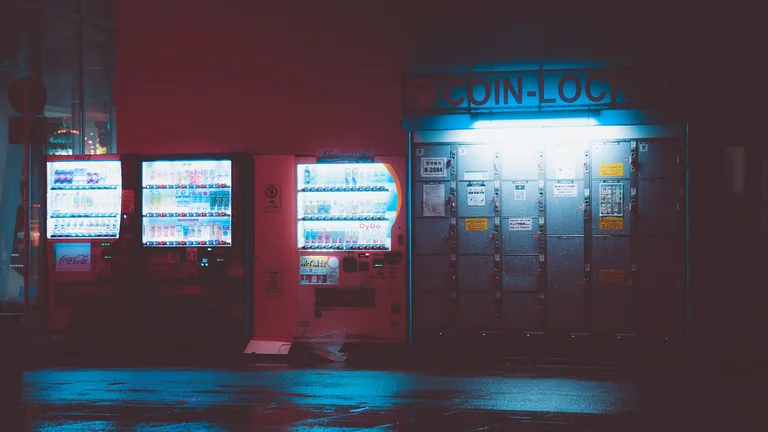
Coin lockers at Kibuneguchi Station · 2020
Keep bags with you whenever your route allows
Option 3
Carrying your own luggage makes the most sense when:
- the bag is compact and easy to lift;
- transfers are few;
- step-free access is confirmed when needed;
- your specific train permits it and all mandatory reservations are secured; and
- you can handle it safely without blocking other passengers.
If carrying is the best fit, stop there. A paid service is not a better answer merely because one exists. Use the route conditions to decide what you can comfortably carry.
Confirm both pickup and delivery locations before sending
If columns are cut off, scroll sideways. Keyboard: focus the table, then use Left/Right Arrow keys.
| Sending point | Receiving point |
|---|---|
| Provider, accepted bag and last handoff time | Acceptance before check-in and matching booking name |
| Waybill details and excluded items | A staffed front desk upon delivery |
| Confirmed delivery date and contact route | Holding period and collection instructions |
Hotels with front desk staff can often assist with baggage handoffs. However, Yamato notes that pickup and delivery services are unavailable at unstaffed private lodgings. Always verify that both your origin and destination can handle luggage transfers; having staff on site does not automatically ensure the entire forwarding route is arranged.
For airport delivery, confirm dispatch and pickup before handing over your bags
Work backwards from the exact airport and flight
Yamato's standard Airport TA-Q-BIN guidance says to send bags two days before departure, or three days in some areas, subject to the acceptance point's cutoff. It is separate from a same-day service. Confirm the exact service at the chosen Yamato sales office, convenience store, hotel or airport counter; these are different acceptance points. A hotel's collection time may affect that day's dispatch. Confirm the flight date, delivery date and airport/terminal with the hotel and carrier.
Source: Yamato Transport: Airport TA-Q-BIN sending and receipt collection
Keep your collection voucher outside your bag
The airport service exchanges the parcel for the sender’s waybill receipt at the relevant counter. Keep that receipt accessible and verify the collection location and current hours. A tracking scan is not confirmation that you can complete collection and airline baggage check-in before departure.
Source: Yamato Transport: Airport TA-Q-BIN sending and receipt collection
Keep essentials within reach and ready for inspection
Carry documents and essentials separately until collection and check carrier and airline packing restrictions. For refund-method tax-free goods handed over from 1 November 2026, outside the narrow midnight exception, collect the goods and keep them available for Customs confirmation before airline baggage check-in. Courier delivery is not that procedure. Use the tax-free guide to check which process applies.
Source: Japan Tourism Agency: refund-method departure sequence
A changed flight needs a new luggage handoff check
A terminal or departure change does not automatically redirect the bag. Ask the carrier about the specific waybill and keep its answer with the revised itinerary. If the cutoff cannot be met, choose another confirmed carrying or storage arrangement; do not turn another parcel product’s faster headline into an assumed airport service.
Yamato explicitly excludes airport-bound luggage from its Time Service delivery. Its airport service page also says time-slot delivery and cash on delivery are not available when sending to an airport; both are offered only on the return leg, from the airport to your home or hotel.
Source: Yamato Transport: Airport TA-Q-BIN sending and receipt collectionSource: Yamato Transport: airport-bound Time Service restriction
These integrated steps were checked on ; this is not a full re-review of the article. Earlier source dates and rules remain attached to their original scope.
Sources for these steps
- Yamato Transport: Airport TA-Q-BIN sending and receipt collection
Luggage delivery requires sending bags 2 to 3 days in advance and following specific drop-off cut-offs. You will need your sender receipt for airport collection. Service is not guaranteed to align with your exact booking or flight times.
- Japan Tourism Agency: refund-method departure sequence
For applicable refund-method goods, the Customs procedure and any required presentation occur before airline baggage check-in. A courier handoff does not fulfil that procedure.
- Yamato Transport: airport-bound Time Service restriction
The courier states that Time Service cannot be used for airport luggage deliveries; be sure to verify the specific airport forwarding service and current cutoff times.
Check the exact train baggage rule
JR Central's oversized-baggage system names a reservation rule for baggage with total dimensions over 160 cm and up to 250 cm on the covered Tokaido, Sanyo, Kyushu and Nishi Kyushu Shinkansen services. Boarding one of those services with such a bag and no reservation carries a stated 1,000 yen fee.
The same operator publishes the ordinary allowance those services work within: two carry-on items, each with three sides totalling 250 cm or less and weighing 30 kg or less, with a maximum length of 200 cm. A bag in the more than 160 cm and up to 250 cm range that also stays within the 200 cm maximum length can therefore sit inside the ordinary allowance and still need the reserved space.
The 1,000 yen fee does not guarantee a seat
The published 1,000 yen fee does not guarantee the same train or replace the required reservation. Without a reservation, JR Central says the bag must use a place designated by the conductor. If all eligible seats are full, the passenger is asked to reserve another train.
If you miss the train for the booked baggage-space seat, depending on your ticket you may be able to use a non-reserved seat on the following train. You cannot take oversized baggage to that seat. To bring the bag on the following train, JR Central says to purchase a new limited express ticket for a reserved seat with an oversized baggage area or compartment.
Live baggage-space inventory, exact ticket change or refund handling, exact total additional cost, staff instructions and disruption handling remain Unknown. The rule is not generalized to other operators or special items.
JR Central separately describes a trial no-reservation storage area on some decks. Whether it is operating and applies to the exact train, car and bag remains Unknown. Do not treat that trial note as a guaranteed fallback or a general exception to the ordinary reservation rule.
That is not a universal rule for every railway or train. Check the operator, service and bag you will actually use. The transport guides can help define the route before the operator check.
Never send these essentials ahead
- passport and travel documents;
- necessary medicine and permissions;
- valuables and irreplaceable items;
- devices you will need tomorrow;
- keys and property access details for check-in; and
- enough clothes and toiletries to cover the delivery buffer.
Carrier exclusions and compensation limits differ. A tracking number does not make every item suitable for forwarding.
Use the Japan arrival checklist to keep entry documents, necessary medicine and first-night essentials in the carried bag.
Build a Plan B for every method
- Forwarding
- Carry it yourself essentials, retain the receipt and contact route, and do not use the last possible delivery date.
- Storage or locker
- Identify a staffed counter or second area and leave time to reach it without missing the next connection.
- Carry it yourself
- Meet any reservation rule, reduce the bag, confirm access and avoid a transfer that depends on unsafe speed.
Not sure your plan is realistic? Score it with the Japan itinerary pacing check: each hotel change costs about half a day, and arrival day is rarely full.
Key facts: rates and limits, checked 20 October 2026 (Yamato's Kanto ⇄ Kansai size-180 and airport prices: 11 October 2026)
If columns are cut off, scroll sideways. Keyboard: focus the table, then use Left/Right Arrow keys.
| Fact | Value | Source |
|---|---|---|
| Yamato TA-Q-BIN, Kanto ⇄ Kansai | Size 160 ¥3,160 · size 180 ¥4,480 (cash); −¥100 drop-off discount | Yamato TA-Q-BIN rates |
| Yamato size limits | Size 160: up to 160 cm and 25 kg · size 180: up to 180 cm and 30 kg · maximum 200 cm and 30 kg | Yamato TA-Q-BIN rates |
| Sagawa, Kanto ⇄ Kansai | Size 160 (30 kg) ¥2,570 · size 180 ¥3,660; −¥100 at an office. Online tracking suspended as of 20 October 2026 | Sagawa fare tables |
| Yamato Airport TA-Q-BIN, Kanto → Narita or Haneda, size 160 | ¥3,680 including the ¥660 airport fee; hand over two days before (three in some areas) | Yamato Airport TA-Q-BIN |
| Yamato same-day delivery in Kyoto City, size 160 | ¥2,860 | Yamato Kyoto baggage page |
| Yamato staffed storage in Kyoto | Yamato's Kyoto counters (e.g. Kyoto Station Center, 8:00–21:00, Sun/holidays to 19:00) store bags for ¥1,000 per bag per day. | Yamato Kyoto baggage page |
| JAL ABC, Narita → a Kanto address | Size 140 ¥2,430 · size 160 ¥2,820 (tax included); maximum 240 cm and 50 kg | JAL ABC |
| Shinkansen oversized bags | 161–250 cm need an oversized-baggage seat (no extra cost); ¥1,000 without; over 250 cm not allowed | JR Central |
We will check these facts again by 11 November 2026.
Your next step
- Measure each bag: length + width + height. Under 160 cm, carrying is easy. From 161 to 250 cm, book an oversized-baggage seat or forward it.
- Note when you next need the bag: the same day means a locker or storage; the next night means forwarding; a flight day means sending it two days before.
- To forward, ask your hotel front desk the evening before: "I'd like to send this suitcase by TA-Q-BIN to [hotel name, address] for arrival on [date]." Show the next hotel's booking confirmation, and keep the receipt (waybill copy) in your wallet.
Questions about this guide
How does hotel-to-hotel luggage forwarding work in Japan?
Confirm both ends before sending: the sending desk or carrier must accept the bag and the receiving hotel must accept delivery for the named guest and date. Build enough delivery buffer that a late bag does not remove essentials from the trip. Expect about ¥3,160 for a large suitcase (Yamato size 160) between the Tokyo and Kyoto/Osaka areas.
How many days ahead should I send luggage in Japan?
Hotel to hotel: one day ahead for most of Japan. From Kyoto, Yamato quotes next-day delivery almost everywhere, but about two days to Hokkaido, northern Tohoku, Nagasaki, Miyazaki, Kagoshima and Okinawa. To the airport: two days before your flight (three in some areas) for Yamato's Airport TA-Q-BIN. If you'll need the bag the night you arrive, send it two days ahead, or carry it.
Can Japan luggage forwarding be same-day?
Yes, but only on specific routes. In Kyoto, Yamato delivers same-day between Kyoto Station and staffed hotels in Shimogyo, Nakagyo, Minami and Higashiyama wards (¥2,860 for size 160). Kyoto City's guide says to complete the station procedure by 14:00. Yamato also runs same-day delivery in some areas of Osaka and Kobe cities. Ordinary TA-Q-BIN between cities is next-day at the earliest.
Can I forward luggage to an Airbnb or vacation rental in Japan?
Yamato states that pickup and delivery are unavailable at private lodging without reception staff. Rely on a non-hotel destination only when the carrier confirms it delivers there and someone can receive the bag under the service conditions. If reception is uncertain, choose a staffed alternative such as an eligible counter or accommodation.
What if the next hotel will not accept forwarded luggage?
Do not send the bag until a receiving arrangement is confirmed. Use another eligible destination, temporary storage or carry the bag for that leg, and keep documents, medication, valuables and the first-night essentials with you.
Detailed problem guides
Read next
Sources and how this guide was checked
About this guide
The best method changes by route. Forwarding removes transfer friction but needs a confirmed chain. Storage solves a bounded gap. Carry it yourself keeps the bag with you but moves the burden onto the route, station and train rules.
How we checked this guide
How we checked this
What to verify before picking your luggage strategy
The official sources support delivery, storage and carrying as conditional options. They do not by themselves show live availability for an unverified place, time, bag or route. The Kyoto, airport, Sagawa, JAL ABC, locker and JR Central sources were rechecked on 20 October 2026. Yamato's Hands-Free Travel page and its region-to-region rate grid keep their 11 October 2026 checks; each source shows its own check date.
If columns are cut off, scroll sideways. Keyboard: focus the table, then use Left/Right Arrow keys.
| Question | What we found | Where it comes from | What this means for your trip |
|---|---|---|---|
| When does luggage forwarding make the most sense? | Only if both locations support the service, the bag fits all size rules, and the delivery timing leaves a safe buffer. | JNTO luggage guidance plus Yamato service and private-lodging precautions | Luggage forwarding is not confirmed until you verify hotel acceptance, drop-off deadlines, and delivery dates. |
| When does short-term luggage storage make sense? | It fits a specific storage gap when the staffed service or other facility accepts the bag during the required hours. | JNTO and Yamato temporary-storage guidance | You still need an exact drop-off spot, a pick-up window, and a backup plan if the first location is full. |
| Does a station guide guarantee locker availability? | No. Busy locations can fill, and the required size, access side and storage limit remain location- and time-specific. | JNTO luggage delivery and storage guidelines | A locker is a short-gap option with a Plan B, not a guaranteed reservation. |
| When does it make the most sense to keep your bags with you? | When your bag is manageable, the transfers and access work, and your exact train allows it with any required reservation already in place. | JR Central carry-on sizes and oversized baggage rules by train and service | If carrying fits, stop there; the existence of a paid service does not improve the result. |
| Does paying the 1,000 yen unreserved-baggage fee guarantee a spot on your train? | No. Paying the 1,000 yen unreserved oversized baggage fee does not guarantee travel on your chosen departure or substitute for an advance reservation. Without a booking, your bag must be placed where the conductor directs; if all eligible baggage spaces are full, you will be asked to book a later train. If you miss your booked train, your ticket may allow you to ride the non-reserved car of a subsequent train, but oversized luggage cannot be brought into standard non-reserved seating—carrying it requires purchasing a new reserved-seat limited express ticket with an oversized baggage space. | JR Central oversized-baggage FAQ | Reserve the baggage-space seat in advance. Live baggage-space inventory, exact ticket change or refund handling, exact total additional cost, staff instructions and disruption handling remain unconfirmed, as are the rules for other operators and special items. Whether JR Central's separately described trial no-reservation deck storage is operating and applies to the exact train, car and bag is also unconfirmed; do not generalise it into an exception to the ordinary reservation rule. |
| Can one Shinkansen baggage rule be applied to every train? | No. JR Central's oversized baggage policy specifies strict dimensions and eligible trains; other rail operators require separate checks. | JR Central oversized-baggage guidance | Check your specific operator, route, and luggage rather than relying on one general railway rule. |
| What should you keep with you? | Keep documents, medicine, valuables, access information and enough essentials for the delivery buffer under personal control. | Carrier restrictions, delivery uncertainties, and passenger responsibility rules at a glance | A tracking number doesn't guarantee safe transit for irreplaceable essentials or items you need right away. |
| When should you reconsider your choice? | Recheck if your provider, hotel, station, hours, luggage, delivery date, train, or accessible route changes. | All services covered: scope and provider-specific limits | We keep this marked as unconfirmed until the steps are fully verified and reliable fallback options are in place. |
Based on official sources, linked below.
Official sources and what each confirms
Official and first-party sources
Official service and railway information
On 20 October 2026 we rechecked Yamato's Kyoto baggage page, Airport TA-Q-BIN rules and private-lodging guidance, the Sagawa fare tables, JAL ABC, Multi-E Cube, Hands Free Kyoto, JNTO, the Japan Tourism Agency tax-free page and JR Central's baggage pages. Yamato's Hands-Free Travel page and its region-to-region rate grid (size 180, and the airport price) keep their 11 October 2026 check.
- Kyoto City: Hands Free Kyoto service guide
What this confirms: The guide directs station-to-accommodation delivery users to complete procedures before 14:00 and confirm accommodation coverage with the delivery company. This does not by itself show a storage counter's collection deadline.
Last checked - Multi-E Cube: locker reservation FAQ
What this confirms: The FAQ details location operating hours versus daily billing cycles starting at 02:00, a ¥500 booking fee per locker plus the day rate (its own example uses S ¥400 and M ¥500 a day), availability-based extensions, overdue charges, and retrieval via reservation number or QR code. The largest sizes are L (86 × 34 × 65 cm) and LW (86 × 56 × 65 cm; 55 cm deep at reservation-only models); large-locker rates vary by location. These rules apply only to this service.
Last checked - Yamato Transport: TA-Q-BIN rates and sizes
What this confirms: Yamato's TA-Q-BIN rates for Kanto ⇄ Kansai are ¥3,160 for size 160 and ¥4,480 for size 180 (cash), with ¥100 off for drop-off. Size 160 covers up to 160 cm and 25 kg, size 180 up to 180 cm and 30 kg, and the maximum is 200 cm and 30 kg.
Last checked - Yamato Transport: baggage delivery and storage in Kyoto
What this confirms: Yamato's Kyoto page offers same-day delivery between Kyoto Station and staffed hotels in Shimogyo, Nakagyo, Minami and Higashiyama wards (¥2,860 for size 160), a next-day KIX service from central Kyoto (drop off by 10:00, collect from 07:00 the next day, ¥4,680 for size 160), same-day delivery in some areas of Osaka and Kobe, and next-day delivery for most of Japan except listed two-day areas. It shows ¥3,160 for size 160 Kyoto → Tokyo, matching the rate table.
Last checked - Sagawa Express: fare table from Kanto (Japanese)
What this confirms: Sagawa's fare table from Kanto to Kansai gives ¥2,570 for size 160 (up to 30 kg) and ¥3,660 for size 180, with ¥100 off at an office.
Last checked - Sagawa Express: fare table from Kansai (Japanese)
What this confirms: Sagawa's fare table from Kansai to Kanto mirrors the Kanto table: ¥2,570 for size 160 and ¥3,660 for size 180.
Last checked - JAL ABC: sending luggage from the airport
What this confirms: JAL ABC's rates from Narita to a Kanto address are ¥2,430 for size 140 and ¥2,820 for size 160, tax included, with a maximum of 240 cm and 50 kg.
Last checked - JNTO: luggage delivery and storage
What this confirms: Delivery and storage are common hands-free options, while availability, capacity, accepted-item and size limits still need to be checked.
Last checked - Yamato Transport: Hands-Free Travel
What this confirms: Yamato publishes delivery, temporary storage, and service-counter information; the exact route, cutoff, and bag conditions remain service-specific.
Last checked - Yamato Transport: private-lodging precautions
What this confirms: Pickup and delivery are unavailable at private lodging without reception staff, so a staffed handoff or sales-office route is required.
Last checked - JR Central: oversized baggage
What this confirms: On covered services, boarding with oversized baggage without a reservation incurs a ¥1,000 fee, and the conductor will assign your bag’s storage location. If all baggage-designated seats are sold out, you must book a later train. Missed your train? You cannot take oversized baggage into non-reserved seating on the next departure—bringing it requires purchasing a new reserved-seat limited express ticket with baggage space. While official pages mention trial unreserved storage on certain decks, availability for any specific train, car, or bag cannot be confirmed in advance.
Last checked - JR Central: personal belongings
What this confirms: JR Central publishes carry-on count, size, weight and prohibited-item rules and leaves baggage management with the passenger.
Last checked - Yamato Transport: Airport TA-Q-BIN sending and receipt collection
What this confirms: Luggage delivery requires sending bags 2 to 3 days in advance and following specific drop-off cut-offs. You will need your sender receipt for airport collection. Service is not guaranteed to align with your exact booking or flight times.
Last checked - Japan Tourism Agency: refund-method departure sequence
What this confirms: For applicable refund-method goods, the Customs procedure and any required presentation occur before airline baggage check-in. A courier handoff does not fulfil that procedure.
Last checked - Yamato Transport: airport-bound Time Service restriction
What this confirms: The courier states that Time Service cannot be used for airport luggage deliveries; be sure to verify the specific airport forwarding service and current cutoff times.
Last checked - Sagawa Express: notices
What this confirms: Notices from 30 September 2026 about unauthorised access to the parcel-enquiry service; the fare pages show tracking and web pickup requests as suspended.
Last checked
Review dates and complete update history
Guide updates Reviewed
When this guide was checked and what changed
- First published
- Last checked
- Check again by
- What we checked
- On 20 October 2026 we rechecked Yamato's Kyoto baggage page, Airport TA-Q-BIN rules and private-lodging guidance, the Sagawa fare tables, JAL ABC, Multi-E Cube, Hands Free Kyoto, JNTO, the Japan Tourism Agency tax-free page and JR Central's baggage pages. Yamato's Hands-Free Travel page and its region-to-region rate grid (size 180, and the airport price) keep their 11 October 2026 check.
- Latest update
- : Rechecked the Kyoto, airport, Sagawa, JAL ABC, locker, Kyoto City, tax-free and JR Central sources. Added that Sagawa's online tracking is suspended and clarified which Airport TA-Q-BIN options are return-leg only.
The date above reflects when these checks were last run. If an individual source was rechecked later, you’ll see that date next to it below. Other copy edits are listed in the update history.
Who edits this guide
One editor looks after this guide
Japan, Booked. is run and edited from Japan. The same editor checks the Japanese and English sources, writes the traveller-facing guidance and keeps the correction history up to date.
What changed
Update history
- Scheduled recheck
Rechecked the Kyoto, airport, Sagawa, JAL ABC, locker, Kyoto City, tax-free and JR Central sources. Added that Sagawa's online tracking is suspended and clarified which Airport TA-Q-BIN options are return-leg only.
- Scheduled recheck
Rechecked on 11 October 2026: every fact under this guide's recheck promise was compared with its primary source. Corrected Yamato's Kanto–Kansai rates to ¥3,160 (size 160) and ¥4,480 (size 180) and reworked the example totals. Corrected Yamato's Airport TA-Q-BIN price for a size-160 bag to ¥3,680.
- Dated key facts
Added check dates next to the key facts, using only facts already in this guide. No facts were rechecked, so the review date is unchanged.
- Added prices, a worked example and key facts
Added a two-suitcase worked example with Yamato, Sagawa and locker prices, same-day Kyoto and airport options, a typical-cost table, key facts and a next step, corrected the oversized-baggage limit and a garbled locker note, and rechecked the carrier and JR Central sources on 8 October 2026.
- Pickup hours, daily rates, and extension terms clearly separated
Added luggage collection cutoff times and total cost comparisons, featuring Kyoto same-day delivery and Multi-E Cube locker reservations. The overall review date remains unchanged.
- Practical next-step workflow included below
Added airport luggage drop-off and pickup guidance to the existing guide after checking the relevant sources. Earlier full-review dates and specialized criteria remain in effect.
- Clarified that paying the unreserved oversize baggage fee should not be relied upon as a backup plan
Clarified that JR Central's 1,000 yen fee for bringing oversized baggage aboard without a prior reservation does not replace a seat reservation or guarantee travel on the same train. Details regarding fully booked trains and missed departures have been added; live seat availability and same-day ticket handling remain unconfirmed.
- Corrected the scope of JR Central baggage rules
Updated the JR Central baggage rules to reflect the 200 cm maximum length limit while maintaining the original list of applicable designated train services.
- Published our guide to matching luggage logistics to your itinerary
Published an official-sources-only guide clarifying reliable luggage forwarding routes, temporary storage gaps, coin locker availability risks, and manageable carry-on routes.
If an operator, organiser or product changes in a way that affects the guide, we check it again sooner. Reader reports help us spot what to investigate, and we verify them against current official information before publishing. Read our update and corrections policy. See every guide's review schedule. Suggest an improvement to this guide.