How to report lost property on Japan trains
Checked against 6 official sources, most recently on . 8 minute read.
What to know first
Ask staff from the railway that ran your train straight away, or contact its official lost-property service with the date, time, train, stations, where you left the item and a clear description. Found items take time to be registered, so a first “not found” isn't final, and JR East says it can't search a train in service even if your phone shows a GPS location. Once the item is found, confirm where it's held, what ID you need and when you can collect it before you travel.
Conditions to check
- Use the operator of the actual train or station, rather than the city name.
- JR East cannot use GPS to individually search a train still in service; registration can take time, so a first negative reply is not conclusive.
- JR Central's Aichi centre does not offer in-person collection; its international-return referral has separate eligibility rules.
- For Tokyo Metro, same-day inquiries at the nearest station differ from later custody and police-transfer arrangements.
- A police lost-property report is a separate matching record, rather than proof of loss or a search investigation.
- JR East
- 050-2016-1601, 8:00 to 20:00; chat 24 hoursA 3-month search window
- JR Central
- 050-3772-3910, option 3, 9:00 to 17:00No claims after 3 months
- Tokyo Metro
- 0570-033-777, 9:00 to 17:00Iidabashi centre 9:00 to 20:00 daily
On this page
Who do you contact?
| Your situation | What to do |
|---|---|
| JR East | JR East trains or stations (Yamanote, Chuo, N'EX, Tohoku and Hokuriku Shinkansen): station staff first, then find chat (24 hours, replies from 9:00 to 21:00) or 050-2016-1601 (8:00 to 20:00). Later, the item goes to a designated police station; in Tokyo, call the police centre on 0570-550-142. Collect with your passport; you pay your own travel. |
| JR Central | Tokaido Shinkansen or other JR Central services: find chat (24 hours) or 050-3772-3910, option 3 (9:00 to 17:00). Later, items go to the Aichi centre, which has no in-person pickup but ships cash-on-delivery in Japan, with overseas returns through eBackHome. Collect with your passport or other ID; a proxy needs an authorisation letter. |
| Tokyo Metro | Tokyo Metro: staff at the nearest station on the day, then usually the Iidabashi Lost and Found Center (day 1 to day 4) and police transfer from day 5, with timing exceptions for late-found items, holidays and item types; Customer Relations Center 0570-033-777 (9:00 to 17:00). Collect with official ID and your seal (a stamp-type seal is accepted). |
| Toei subway, bus or tram | Toei subway, bus or tram: any Toei station or the responsible bus office, or the Customer Center on 03-3816-5711 (9:00 to 20:00, in English and four other languages), with chat 24 hours a day. Collect with ID. |
| A through-running train | A through-running train, such as Tokyo Metro running into a private railway: contact both operators. |
| Unknown location | Anywhere, or you don't know where: file a lost-property report at a police box (you need a Japanese phone number), search the police database and remember the 3-month limit. Collect with your passport and the report number. |
| Wallet, bank cards or phone | A wallet or phone with cards in it: also call your card issuer or mobile carrier now. |
Sources for this section: JR East: lost-property guidance · JR Central: lost and found · Tokyo Metro: lost and found · Toei Transportation: lost and found · Tokyo Metropolitan Police: Lost and Found Center · National Police Agency: lost-property reports
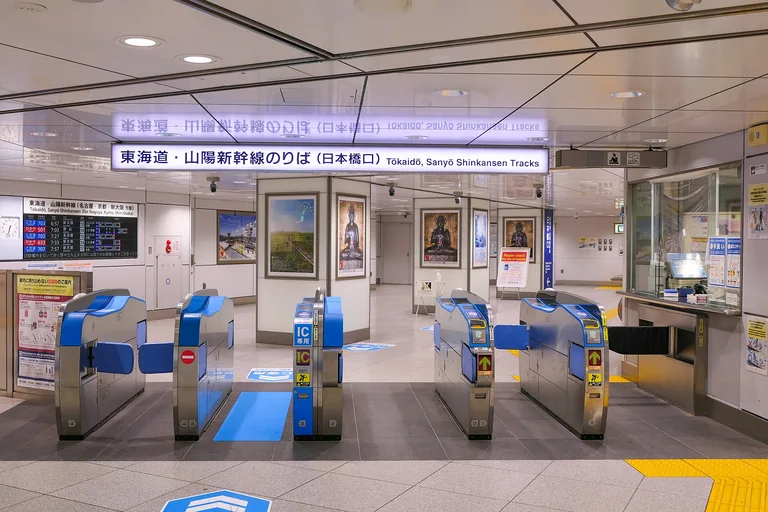

Use this guide to prepare a lost-item report and plan how to collect an item that has been found.
First, determine whether this is an ordinary lost item or an urgent emergency
For ordinary lost property, note where you last had the item and tell station staff or message the operator's find chat. If there is an urgent safety concern, seek emergency assistance immediately rather than waiting for an online reply.
This guide helps you file a lost-property report and plan collection. It cannot track items, guarantee recovery, or authorise entry to railway property. Never enter tracks or staff-only areas to chase a device signal.
Write the journey down while you remember it
Record the travel date, approximate departure and arrival times, line or train, boarding and alighting stations, direction, and where the item was left. Add the carriage and seat if known, plus colour, size, material, model and a distinctive outer mark.
Use that description in the operator's official form or with station staff. Never provide account passwords, payment PINs or device unlock codes in a lost-item inquiry or general trip note. Keep identification documents and ownership checks within the official collection process.
Use the operator that handles the relevant journey
JR Central notes that found property takes time to process and register, and that items left on through-service trains may be handled by partner railways. Its guidelines outline how to submit an inquiry, where found items are held, and how to prove ownership at collection.
The first reply may therefore be a next contact or a request to check again, not confirmation that an item is gone. Keep the train and operator details together so you do not repeat a broad 'Tokyo station' report without identifying the actual journey.
Sources for this section: JR Central: lost and found
A device location is not an immediate retrieval service
JR East notes that registering lost property takes time and trains cannot be searched individually while in service, even if you track your device via GPS. A moving or estimated location ping does not verify that an item is ready for collection at a station counter.
Give the operator the information it requests, and inquire again if an item has not yet appeared in its records. Avoid treating a location dot as permission to search a carriage that is not in service, confront another passenger or travel to a depot. A safe staffed inquiry is the next useful action.
Sources for this section: JR East: lost-property guidance
Know when a police report is required separately
The National Police Agency explains how filing a lost-property report helps match found items with owners. Specific circumstances and identifying details are essential. Transit operator lost-and-found and police reporting are separate procedures; always check where your item is currently held and whether it has been transferred.
Give personal details only in the operator's or police report itself. In a planning note, keep a reference to the report privately rather than reproducing identification documents or access credentials.
Sources for this section: National Police Agency: lost-property reports
Confirm the pickup before changing the itinerary
When an item is located, ask where it is held, what identification or authorisation is required, the collection window and whether any shipment arrangement is available for that particular item. Do not assume the item can be moved to your next station or sent overseas.
Compare the retrieval plan with the rest of the trip. If a detour would risk a flight or another essential commitment, ask about the responsible party's permitted alternatives before travelling. A found-item notification is not yet completed retrieval.
Keep your reference number and next steps together
Keep a private note of your journey, the report reference, the office you contacted and the next step it gave you. Record whether you are waiting for a search result or arranging collection, so a found-item notice is not mistaken for completed retrieval.
If the item gives access to money or accounts, contact the bank or service separately through its secure support channel. Recovering the item does not by itself resolve account-security concerns.
Worked examples: three lost items, step by step
Example A: a backpack left on the JR Yamanote Line at about 14:10, between Shibuya and Shinjuku. At 14:20 at Shinjuku, go straight to JR staff at the gate and tell them the line, direction, car number if you know it, the time and where you left the bag (show the phrase card below). Same-day staff checks are the fastest route.
If it isn't found that day, message JR East's find chat (it takes messages 24 hours a day and replies from 9:00 to 21:00) or call 050-2016-1601 (8:00 to 20:00). Registration takes time, so ask again the next day. JR East can't search a train in service, even if your AirTag shows the bag on it.
JR East moves unclaimed items to a designated police station. File a lost-property report at any police box and search the Tokyo police database, or call the Tokyo Metropolitan Police Lost and Found Center on 0570-550-142. Give a Japanese phone number, such as your hotel's: the police centre says that, as a rule, it doesn't make international calls. Police keep found items for 3 months. To collect, bring your passport; the centre at Iidabashi is open Monday to Friday from 8:30 to 16:30.
Example B: a phone left on a Nozomi from Kyoto to Tokyo, noticed at the hotel, with a flight home in 2 days. Open JR Central's find chat now (it takes messages 24 hours; a reply may not come until the next day) and give the train name or number, car and seat, and the phone's model, colour and case. You can also call 050-3772-3910 and press 3 (9:00 to 17:00; busiest from 9:00 to 11:00).
If the phone is held at a station, collect it there with your passport. JR Central has Lost & Found Offices at Tokyo, Shin-Yokohama, Shizuoka, Hamamatsu, Nagoya, Kyoto and Shin-Osaka, and you pay your own travel to get there. If it has moved to the Aichi Lost & Found Center, you can't collect it in person: ask for cash-on-delivery to your hotel in Japan. Once you're home, JR Central points you to its overseas service, eBackHome. Our judgement: if you fly in 48 hours, ask for delivery to the departure-airport hotel or a friend's address rather than chasing it across stations.
Example C: an umbrella left on a Tokyo Metro train, noticed the next morning. Tokyo Metro sends items to its Lost and Found Center at Iidabashi Station (Namboku Line, outside the gates, 9:00 to 20:00 daily) from the next day until day 4. After 5 days they go to the police Lost and Found Center. Call the Customer Relations Center on 0570-033-777 (9:00 to 17:00; choose your language) or use the online form, then collect with ID.
Sources for this section: JR East: lost-property guidance · JR Central: lost and found · Tokyo Metropolitan Police: Lost and Found Center · Tokyo Metro: lost and found · National Police Agency: lost-property reports
Show this card to station staff
Fill in the blanks on your phone and show it at the gate or ticket office.
忘れ物をしました。 (I left something on the train.)
日時:_月_日 _時_分ごろ (Date and time)
路線・行き先:___線 ___行き (Line and destination)
号車・座席:_号車 _番_席 (Car and seat)
場所:網棚/座席の下/トイレ (Overhead rack, under the seat or toilet)
物:_色の___(中身:___) (Colour, item and contents)
連絡先(日本の電話番号):___ (Contact: a Japanese phone number)
Your next step
1. Name the operator using “Who do you contact?” above.
2. Fill in the phrase card on your phone and show it to station staff now, or paste the same details into that operator's find chat or form.
3. Ask for a reference number and save it with the operator, date and next contact time. If nothing turns up in 2–3 days, file a police report and search the police database.
Sources for this section: National Police Agency: lost-property reports
Key facts and when we'll check them again
JR East: find chat 24 hours (replies from 9:00 to 21:00); 050-2016-1601 from 8:00 to 20:00; no individual search of trains in service; a 3-month search window. JR Central: find chat 24 hours (a reply may not come until the next day); 050-3772-3910, option 3, from 9:00 to 17:00; offices at Tokyo, Shin-Yokohama, Shizuoka, Hamamatsu, Nagoya, Kyoto and Shin-Osaka; no pickup at the Aichi centre, cash-on-delivery shipping, overseas returns through eBackHome, and no claims after 3 months. Checked on 11 October 2026; we'll check it again by 8 January 2027.
Tokyo Metro: the nearest station on the same day, the Iidabashi centre (9:00 to 20:00 daily), normally from day 1 to day 4, then police transfer from day 5 with timing exceptions; 0570-033-777 from 9:00 to 17:00. Toei: 03-3816-5711 from 9:00 to 20:00 daily (English, Chinese, Korean, Spanish and Portuguese), lost-property chat takes messages 24 hours, with replies from 9:00 to 22:00 (messages after 21:00 are answered from 9:00 the next day). Checked on 11 October 2026; we'll check it again by 8 January 2027.
Tokyo Metropolitan Police Lost and Found Center: 0570-550-142 (8:30 to 17:15); counter open Monday to Friday from 8:30 to 16:30, closed on public holidays and over the New Year holidays (29 December 2026 to 3 January 2027); a Japanese phone number is needed and, as a rule, the centre makes no international calls. Police keep items for 3 months, and a report is for matching, not a search. Checked on 11 October 2026; we'll check the police centre again by 8 January 2027 and the National Police Agency page by 8 April 2027.
Sources for this section: JR East: lost-property guidance · JR Central: lost and found · Tokyo Metro: lost and found · Toei Transportation: lost and found · Tokyo Metropolitan Police: Lost and Found Center · National Police Agency: lost-property reports
JR, metro or another operator: who should you contact for lost property?
Should I contact JR or the metro for a lost item in Japan?
Contact the company that ran the train, not the one whose name is on the station. The Yamanote Line and N'EX are JR East, the Tokaido Shinkansen is JR Central, and the Ginza or Marunouchi lines are Tokyo Metro. On a through-running train, contact both companies. If you don't know, file a report at a police box: railway items are handed to the police later anyway.
Can I use phone tracking to recover an item from railway property?
No. JR East says it can't search a train in service even when GPS shows the item on board. Give the location to staff or in find chat, wait for the item to be registered, and ask again the next day. Never go onto tracks, depots or staff areas.
What identification is needed to collect lost property in Japan?
Your passport. JR Central and the Tokyo police both accept it, and Tokyo Metro asks for official ID plus a seal (a stamp-type seal is accepted). A proxy needs their own ID, a copy of yours and a signed authorisation letter. For a phone, the Tokyo police also ask for the SIM or serial number.
What if I leave Japan before my lost item is found?
JR Central ships found items cash-on-delivery inside Japan and refers overseas requests to its eBackHome service. JR East's lost-property page doesn't mention shipping, inside Japan or abroad; ask its lost-property line, 050-2016-1601 (8:00–20:00). Otherwise, authorise someone in Japan to collect it with a letter and a copy of your passport. Police hold items for 3 months.
Official pages for this guide
The rules in this guide come from the official pages below. Japan, Booked. does not book or submit requests on your behalf.
Read next
- Emergency numbers and visitor help in JapanFind the right emergency contact or help desk, and know what details to have ready when you reach out.
- What to do when your train is cancelled in JapanFind your ticket issuer, learn the refund route, and plan the next leg of your journey.
- Boarding with SmartEXUnderstand IC cards, QR codes and paper tickets.
Sources and how this guide was checked
Published · Based on official sources · no affiliate links
Official sources
These official sources explain the rules and conditions used in this guide. Live availability and your own booking, admission or service outcome still need to be confirmed for your trip.
- JR Central: lost and found
What this confirms: JR Central takes lost-property enquiries through find chat (24 hours) and on 050-3772-3910, option 3 (9:00 to 17:00). Found items take time to register and may be handled by partner railways on through-service trains. It has Lost & Found Offices at Tokyo, Shin-Yokohama, Shizuoka, Hamamatsu, Nagoya, Kyoto and Shin-Osaka; the Aichi Lost & Found Center has no in-person pickup but ships cash-on-delivery in Japan, overseas returns are referred to eBackHome, and items cannot be claimed after 3 months.
Last checked - JR East: lost-property guidance
What this confirms: JR East takes lost-property enquiries through find chat (messages 24 hours, replies 9:00 to 21:00) and on 050-2016-1601 (8:00 to 20:00). Found-item registration can take time, and it cannot individually search a train in service even when the owner has GPS information; unclaimed items move to a designated police station. Its page does not mention shipping items.
Last checked - National Police Agency: lost-property reports
What this confirms: The National Police Agency describes a lost-property report as a record that helps match found items with owners, not a search. Police keep found items for 3 months.
Last checked - Tokyo Metro: lost and found
What this confirms: On the day, ask at the nearest Tokyo Metro station. Normally items are kept at the Lost and Found Center at Iidabashi Station (9:00 to 20:00 daily) on days 1–4 and transferred to police from day 5. Late-found items, holidays and item types can alter the transfer timing; the dates are not an individual-item arrival guarantee. The Customer Relations Center is on 0570-033-777 (9:00 to 17:00). Collection needs official ID and a seal; a stamp-type seal is accepted.
Last checked - Toei Transportation: lost and found
What this confirms: For Toei subway, bus and tram items, ask any Toei station or the responsible bus office, or call the Customer Center on 03-3816-5711 (9:00 to 20:00 daily, in English, Chinese, Korean, Spanish and Portuguese); chat is available 24 hours.
Last checked - Tokyo Metropolitan Police: Lost and Found Center
What this confirms: The Lost and Found Center at Iidabashi answers on 0570-550-142 (8:30 to 17:15) and its counter is open Monday to Friday from 8:30 to 16:30, closed on public holidays and over the New Year holidays. Enquiries need a Japanese phone number, because the centre does not make international calls. Collection needs ID; for a phone, the SIM or serial number is also asked for.
Last checked
About this guide
Identify the operator, journey and distinguishing item details, then confirm reporting and collection. A device location is not permission to enter railway property.
The operator or police must confirm whether an item has been found, where it is held and how you can collect it. This guide cannot track or recover it.
How we checked this
Sources and limits of this guide
These dated notes clarify what is confirmed by official sources—and what you still need to verify yourself.
If columns are cut off, scroll sideways. Keyboard: focus the table, then use Left/Right Arrow keys.
| Question | What we found | Where it comes from | What this means for your trip |
|---|---|---|---|
| What JR Central's lost and found policy covers | JR Central outlines separate stages for filing an inquiry, internal system logging delays, through-train handovers between different railway operators, and identity verification at pickup; submitting an inquiry does not mean your lost item has been retrieved. | JR Central: lost and found | This applies only to the scope stated. |
| What points are clarified by JR East's lost-property guidance? | JR East says found-item registration can take time and it cannot individually search a train in service even when the owner has GPS information; a position does not grant train or depot access. | JR East: lost-property guidance | This applies only to the scope stated. |
| What can an official National Police Agency lost-property report confirm? | The National Police Agency describes reporting a lost item to aid matching with recovered property; filing a report does not by itself show active tracking or recovery. | National Police Agency: lost-property reports | This applies only to the scope stated. |
| Does published guidance determine the outcome for your specific case? | No. The cited instructions establish specific facts, not a reservation, current capacity, completed transaction or personal suitability. | The three cited statements based on official sources above. | Keep missing conditions still unconfirmed and ask the responsible party before committing. |
Based on official sources, linked below.
Guide updates Reviewed
When this guide was checked and what changed
- First published
- Last checked
- Check again by
- What we checked
- JR Central, JR East, Tokyo Metro and Toei lost-property pages, the Tokyo Metropolitan Police Lost and Found Center and the National Police Agency report page were checked on 8 October 2026. Whether a particular item has been found, and where it is held, is not checked.
- Latest update
- : Rechecked on 11 October 2026: the dated facts in this guide were compared with their primary sources (the per-source dates and the review date stay as they were until the source list is updated). Nothing had changed.
The date above reflects when these checks were last run. If an individual source was rechecked later, you’ll see that date next to it below. Other copy edits are listed in the update history.
Who edits this guide
One editor looks after this guide
Japan, Booked. is run and edited from Japan. The same editor checks the Japanese and English sources, writes the traveller-facing guidance and keeps the correction history up to date.
What changed
Update history
- Scheduled recheck
Rechecked on 11 October 2026: the dated facts in this guide were compared with their primary sources (the per-source dates and the review date stay as they were until the source list is updated). Nothing had changed.
- Added an operator chooser, worked examples and a phrase card
Added a who-to-contact chooser for JR East, JR Central, Tokyo Metro, Toei and the police, three step-by-step examples, a Japanese phrase card for station staff, a next-step list and key facts with check dates, and answered the four traveller questions directly. Operator and police sources were rechecked on 8 October 2026.
- Primary official source check
Updated lost-and-found reporting procedures across JR Central, JR East, and the National Police Agency; clarified that in-service trains cannot be actively tracked via personal GPS, and noted that item recovery remains subject to conditions.
- Source-reviewed publication
Published an independently reviewed guide with dated primary sources, a clear scope and limitations, and links to help you plan your next steps.
If an operator, organiser or product changes in a way that affects the guide, we check it again sooner. Reader reports help us spot what to investigate, and we verify them against current official information before publishing. Read our update and corrections policy. See every guide's review schedule. Suggest an improvement to this guide.