What to do when your train is cancelled in Japan
Checked against 16 official sources, most recently on . 12 minute read.
What to know first
Expect a full refund with no fee if JR cancels your train, claimable within 1 year. If it arrives 2 hours or more late, the limited express charge is refunded (¥5,610 for an adult Tokyo–Kyoto smartEX Nozomi Ordinary Car reserved seat in the regular season). Claim from whoever sold you the ticket, because the steps depend on the product (a SmartEX reservation, Hayatoku fare, rail pass or paper ticket) and on whether you've collected tickets or passed the gate. Keep your original tickets: a refund won't hold a seat on a later train or cover hotels and other knock-on costs. If you simply missed a standard smartEX Service train, you may ride a non-reserved Ordinary Car seat on a later Shinkansen the same day on the same route, but not on a Hayatoku fare.
For travellers navigating train cancellations, timetable disruptions, or missed reservations who need clear refund and change procedures.
- JR cancels your train
- Full refund with no fee
- Arrival 2 hours or more late
- The limited express charge is refundedClaims within 1 year
- Cancelling a smartEX booking yourself
- ¥320 before departureChanges before departure are free
Official link. We earn nothing from it.
On this page
What happened, and what do you do?
| Your situation | What to do |
|---|---|
| Train cancelled before departure | JR cancelled the train before you started: a full refund with no fee (refund claims within 1 year). Go back to the original seller: SmartEX online if you haven't collected tickets, otherwise a ticket office of the company that sold them. |
| Journey ended at an intermediate station | The train was cancelled mid-journey: the unused part of the fare and the full limited express charge are refunded, or you can return free to the starting station for a full refund. Ask at the ticket office at your station. |
| Arrival at least two hours late | Arrival 2 hours or more late: the limited express charge is refunded (on smartEX, the specified amount, automatically for IC or QR boarding). With paper tickets, claim at a ticket office within 1 year. |
| A JR delay caused a missed connection | If a delay elsewhere on JR made you miss your SmartEX train, change it yourself before departure; after departure, ask Shinkansen station staff. Non-reserved seats are fine that day. With paper tickets, if the missed connection leaves you arriving more than 2 hours late, JR Central treats it like an interrupted journey: show your tickets to staff at the gate or ticket office. |
| You missed the train yourself | You missed it yourself: with standard smartEX or a paper ticket, ride non-reserved later that day; with Hayatoku, buy a new ticket. |
| Cancelling for your own reasons | You're cancelling for your own reasons: ¥320 on smartEX before departure; on paper, ¥220 plus ¥340 two or more days before, or the 30% fee from the day before. Ask the seller. |
| Bought through an agency or reseller | Bought from a travel agency or overseas reseller: go back to the agency, because JR East can't refund card purchases made elsewhere. |
| JR-EAST Train Reservation | JR-EAST Train Reservation (eki-net): cancel in eki-net before pickup, free until 21:00 the day before travel and then ¥320 per person for a reserved seat (¥220 non-reserved, ¥220 for a fare ticket); after pickup, only at a JR East ticket office. |
| An activated Japan Rail Pass | A Japan Rail Pass that has already started: no refund and no extension; use other covered trains. |
| A missed hotel, flight or tour | A hotel, flight or tour missed because of the delay: JR doesn't pay these, so ask your insurer or the supplier. |
Sources for this section: JR Central: cancelled and delayed trains · SmartEX: refunds and disruption handling · SmartEX FAQ: refunds after a long delay · SmartEX: smartEX Service conditions · JR East: ticket exchanges and refunds · JR-EAST Train Reservation: changes and cancellations · JAPAN RAIL PASS: conditions for use · SmartEX: what happens if I miss my reserved train?
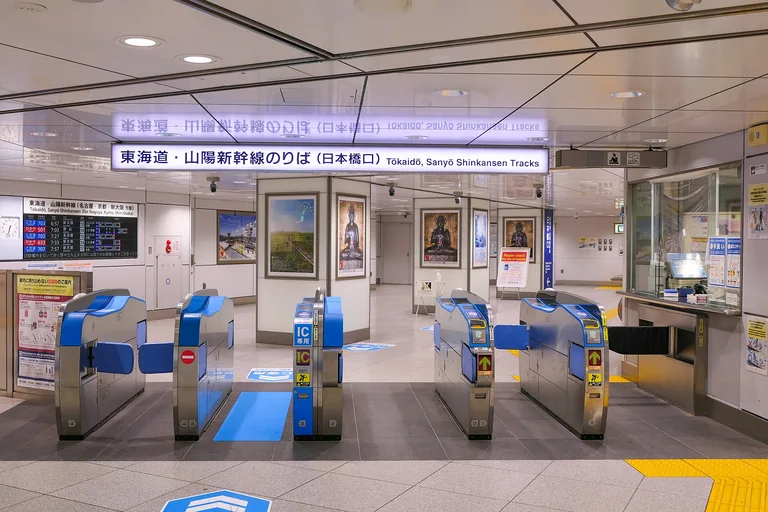

Check what was cancelled before hitting refund
A cancelled train, a delayed train and your own decision not to travel can lead to different handling. Start with the operator’s current service notice for the actual date and section, then match that notice to the ticket you bought. A weather warning is important safety information, but it does not by itself describe the refund terms of a particular ticket.
Write down the train, date, origin and destination, ticket product, issuing channel and whether you have already started travel. Keep the original tickets and confirmation. Do not throw away a paper ticket or pay for a replacement before finding out which action the issuer requires. This guide helps organise that conversation; it cannot decide an individual refund or authorise travel on a different service.
Use the seller and the product, not the word JR alone
JR East’s ticketing information distinguishes unused tickets, passes, tickets bought through agents and credit-card purchases made elsewhere. The issuing channel matters. A staffed counter operated by another company is not automatically able to reverse every transaction or handle every discounted product.
Check the name on the order confirmation and the actual product description. A national pass, a regional pass, an online reservation and a paper basic-fare ticket can require different steps even when all involve a JR train. Keep your question narrow: I bought this product through this channel, it has this used or unused status, and the following service was affected. Do not describe it only as my train ticket.
Sources for this section: JR East: ticket exchanges and refunds · JR East: reservation and refund questions
For SmartEX, check both disruption eligibility and whether tickets have been picked up.
SmartEX’s refund guide distinguishes ordinary self-service cancellation from special handling for affected sections. It uses emergency notices to explain when fee-free processing is available. Picked-up paper tickets follow a counter process rather than the same unused digital-reservation workflow. Before departure, online changes are available only if you have not entered the gate or picked up your tickets. Read the actual notice before confirming a chargeable cancellation.
Do not choose the quickest-looking button merely to make an error disappear. Confirm whether the reservation includes the affected section and whether you have passed the gate or collected paper tickets. If the screen shows an unexpected fee, pause and ask the official service which process applies. Keep a record of the reservation state; a screenshot can help explain the issue, but it is not an independent approval of a refund.
Sources for this section: SmartEX: refunds and disruption handling
If you miss your train, options depend on your specific ticket
For a standard SmartEX reservation, current SmartEX FAQs state that if you miss your booked train, you may ride a non-reserved Ordinary Car seat on a later Shinkansen on the same day and route. Before your train departs, if you have not printed paper tickets or entered the gate via IC card or QR-Ticket, change your booking in SmartEX rather than waiting for departure.
Do not apply that recovery rule to Hayatoku tickets. SmartEX specifies that Hayatoku fares are strictly valid only for the booked train and facilities; they cannot be used on any other train, including non-reserved cars. If you take a different train or use different facilities, you must purchase the required tickets separately and pay the standard Limited Express or Green Car charges. Always verify your specific product name before deciding how to handle a missed departure.
Ticket pickup changes your options: once physical SmartEX tickets are collected, online changes are no longer available. Before departure, qualifying changes (same date, section, seat category, and train class) can be made once at JR Central, JR West, or JR Kyushu Shinkansen ticket machines or counters; Hayatoku fares are not eligible for fee-free changes. If the train has already departed, go to Shinkansen station staff rather than trying online workarounds.
JR Central's standard reserved-seat policy applies separately; it is not guaranteed under SmartEX terms. If you miss your designated train, your Limited Express reserved-seat ticket becomes non-refundable and you lose the reserved seat once the train departs. You may still be able to use the ticket for non-reserved seating later that day. For a reserved seat on a later departure, JR Central requires you to buy a new Limited Express reserved-seat ticket at full fare.
Sources for this section: SmartEX: what happens if I miss my reserved train? · SmartEX: changes after ticket pickup · JR Central: missed reserved-seat trains
Base fare, limited express surcharge, and any cancellation deductions are calculated separately
JR Central applies separate policies for cancellations before departure, mid-journey disruptions, and limited express delays. JR East similarly distinguishes base fares from express surcharges, with terms varying by ticket type. A service delay does not guarantee a full refund for your entire trip or reimbursement for alternative travel costs.
Itemise each expense instead of assuming one lump sum: unused rail tickets, express supplements, new travel bookings, hotels, and missed reservations. Check what the operator or ticketing provider covers, and contact your insurer or other suppliers separately where applicable. Keep receipts and official delay notices secure. Do not assume rental cars or hotel stays are covered simply because your train was disrupted.
Sources for this section: JR Central: cancelled and delayed trains · JR East: ticket exchanges and refunds
Keep your refund claim separate from arranging your alternative travel route
Confirm whether continuing is essential and verify what replacement services are actively running. A refund will not secure a seat on a later train, and a timetable lookup does not guarantee ticket or luggage capacity. If station staff offer an approved alternative, note their directions and complete the proper ticket adjustments.
Review the rest of your day before paying for new travel arrangements. Hotel check-in, luggage forwarding, and timed bookings may each require separate updates. Consider shortening or ending your journey rather than taking on a risky, tight connection. No travel expense calculation outweighs official safety advice—when conditions become dangerous, follow transport operators and local authorities rather than trying to force your schedule.
Keep bank processing distinct from the issuer’s refund decision
SmartEX notes that its payments and refunds are settled in yen, while foreign-transaction charges are governed by the cardholder’s agreement with the issuer. It also describes charging a changed reservation and refunding the earlier one. A temporary pair of transactions is not automatically a duplicate error, nor a guarantee that the converted amounts match exactly.
Keep your booking record, refund receipt, and credit card statement as separate references when reviewing transactions. If a charge remains still unconfirmed, contact the responsible merchant or card issuer directly rather than submitting multiple cancellation requests. Never post full card numbers, security codes (CVV), or bank statements online. Note that this guide does not calculate foreign exchange adjustments, guarantee card issuer settlement timelines, or evaluate credit card travel insurance coverage.
Sources for this section: SmartEX: refunds and disruption handling
Close your case only after every practical step is complete.
Keep clear personal notes of the affected service, the issuer you contacted, ticket status, the action you requested, the response, and your next follow-up date. Submitting a request, receiving refund approval, and getting paid are separate stages. Your notes serve as a reminder, not official proof that the case is resolved.
Before leaving Japan, check if any remaining step requires a physical ticket, your original payment card, or a specific counter. The linked operator and issuer pages maintain their own update dates and product terms; this guide does not turn them into a universal guarantee. Keep all records until the process is fully complete, and recheck if your ticket, itinerary, or provider instructions change.
Worked examples: four things that can go wrong
Example A: your Nozomi from Tokyo to Shin-Osaka is cancelled because of a typhoon; you booked on SmartEX and haven't passed the gate. SmartEX posts an emergency notice at the top of the login screen. To cancel the trip, request the refund yourself from My Trips → Details (Change/Refund) before the train's departure time: a full refund with no fee, ¥14,520 back to your card for an adult smartEX Nozomi Ordinary Car reserved seat in the regular season. To keep travelling, change to another train yourself free of charge before departure; if you can't, ask at a JR Central, JR West or JR Kyushu ticket office.
If you have already collected paper tickets, get the refund at a JR Central, JR West or JR Kyushu ticket office within 1 year of the travel date. JR doesn't pay for your hotel in Osaka: cancel it under the hotel's own terms, or claim on your travel insurance.
Example B: your Nozomi from Tokyo arrives in Kyoto 2 hours 15 minutes late. With SmartEX and IC or QR boarding, the “specified amount” (equal to the limited express ticket) is refunded automatically to your card, ¥5,610 for an adult Tokyo–Kyoto Nozomi Ordinary Car reserved seat in the regular season (¥5,410 off-peak, ¥5,810 peak, ¥6,010 super-peak), and you don't need to do anything. With paper tickets from a station, the limited express charge is refunded in full at a ticket office; by our calculation that is about ¥5,810 for Tokyo–Kyoto Nozomi reserved (the ¥14,170 adult fare minus the ¥8,360 basic fare). The basic fare isn't refunded, because you completed the journey.
A Japan Rail Pass holder on a Hikari has nothing to refund, and the pass isn't extended. On a Nozomi with the pass-holder ticket, go through a staffed gate and tell staff; that ticket may be refunded.
Example C: you change your mind about a trip, with no disruption. A smartEX reservation not yet collected or used at the gate costs ¥320 to cancel at any time before departure. After the departure time, smartEX refunds automatically from the next day, minus the specified amount (for example ¥5,610 for Tokyo–Kyoto).
A paper Tokyo–Kyoto reserved ticket (¥14,170) costs ¥560 to cancel 2 or more days before travel: JR Central charges each part separately, ¥220 for the basic fare ticket and ¥340 for the reserved limited express ticket, and its single-ticket exception covers only limited express plus Green or sleeper and express plus reserved-seat combinations. From the day before until departure, the fee is ¥220 plus 30% of the limited express charge (about ¥5,810), with fractions under ¥10 dropped (¥1,740), so ¥1,960 in total; the 30% fee has a minimum of ¥340 (JR passenger rules, Article 273). After departure, a paper reserved ticket isn't refundable, but you can ride non-reserved later that day. A Japan Rail Pass that hasn't started costs ¥560 (bought online) or 10% (exchanged from an Exchange Order) to refund.
Example D: you miss your train through your own fault. With a standard smartEX reservation, take a non-reserved Ordinary Car seat on a later Shinkansen the same day on the same route, at no cost; before departure, you could instead have changed the train yourself for free. A smartEX Hayatoku fare is valid only on the booked train, so buy a new ticket at the normal price. With a paper reserved ticket, ride non-reserved on a later train the same day, or pay the full limited express reserved charge again for a reserved seat. With an oversized-baggage seat, you can't take the bag into a non-reserved seat, so buy a new oversized-area seat.
Sources for this section: SmartEX: refunds and disruption handling · SmartEX FAQ: suspended or badly delayed trains · SmartEX FAQ: refunds after a long delay · SmartEX: specified amounts for reserved seats · SmartEX: smartEX Service conditions · JR Central: missed reserved-seat trains · JR East passenger rules: Article 273 (refund fee for limited express tickets) · JAPAN RAIL PASS: conditions for use · JAPAN RAIL PASS: NOZOMI MIZUHO Ticket rules · SmartEX: what happens if I miss my reserved train?
Your next step
1. Find your line in “What happened, and what do you do?”
2. Look at your confirmation and note who sold the ticket (SmartEX, JR East, JR West or an agency) and the product name, watching for “早特/Hayatoku”.
3. SmartEX, not yet collected: go to My Trips → Details (Change/Refund) before the departure time. Paper tickets: keep them and take them to that company's ticket office.
Sources for this section: SmartEX: refunds and disruption handling · SmartEX: changes after ticket pickup
Key facts and when we'll check them again
JR train cancelled: full refund of the fare and charges; mid-journey, the unused fare plus the full limited express charge, or a free return to where you started. Arrival 2 hours or more late: the limited express charge is refunded in full, with claims within 1 year. Checked on 11 October 2026 with JR Central and JR East; we'll check it again by 8 January 2027. JR East's English page is marked “Current as of March 2021”; the fees in this guide are from JR Central's current page.
smartEX: a full refund with no fee if you cancel because of a suspension or a delay of 2 hours or more, and an automatic refund of the specified amount for IC or QR boarding (¥5,610 for an adult Tokyo–Kyoto Nozomi Ordinary Car reserved seat in the regular season; table as of 1 April 2025). Own-reason refunds cost ¥320 before departure, and changes are free and unlimited up to 4 minutes before departure (within 3 months of purchase). If you miss your train, you can use a non-reserved Ordinary Car seat later the same day, but not on Hayatoku. Once you collect paper tickets, online changes are no longer possible; you can make only one change at a JR Central, West or Kyushu machine or counter before departure (not Hayatoku). Checked on 11 October 2026; we'll check it again by 8 January 2027.
Paper ticket refund fees: ¥220 for the basic fare; ¥340 for a reserved ticket until 2 days before, then 30% (minimum ¥340) from the day before. A missed paper reserved train can't be refunded after departure; you can ride non-reserved the same day or pay the full charge for a later reserved seat. A Japan Rail Pass is not refunded or extended after its start date, and JR doesn't cover extra transport or accommodation. Checked on 11 October 2026; we'll check it again by 8 January 2027.
Sources for this section: JR Central: cancelled and delayed trains · JR East: ticket exchanges and refunds · SmartEX FAQ: suspended or badly delayed trains · SmartEX FAQ: refunds after a long delay · SmartEX: specified amounts for reserved seats · SmartEX: reserved-seat prices · SmartEX: smartEX Service conditions · SmartEX: what happens if I miss my reserved train? · SmartEX: changes after ticket pickup · JR Central: missed reserved-seat trains · JAPAN RAIL PASS: conditions for use · JAPAN RAIL PASS: NOZOMI MIZUHO Ticket rules
Japan rail disruption: changes, refunds and missed trains
What should I do if my Shinkansen is cancelled?
First check the operator's service notice and decide whether you still need to travel today. If not, you get a full refund with no fee: do it yourself on SmartEX before departure, or at a ticket office of the company that sold the ticket within 1 year. If you're still travelling, change trains for free on SmartEX or at a JR ticket office. JR won't pay for hotels or alternative transport.
How do SmartEX refunds work after a train cancellation?
If the train you intended to board is suspended and you cancel, SmartEX refunds you in full with no fees. Do it from My Trips before the departure time; the emergency notice at the top of the login screen lists the affected sections. If you've already collected paper tickets, refund them at a JR Central, JR West or JR Kyushu ticket office within a year. If you boarded with IC or QR and arrived 2+ hours late, the refund is automatic.
What happens to a JR Pass during major train disruption?
Nothing is refunded or extended once the pass has started, whatever the cause (JR Pass conditions of use). You can ride any other covered JR train instead, including Hikari, Kodama or local trains, and book new reserved seats free. The separate Nozomi/Mizuho pass-holder ticket can be refunded if the train can't run, and staff may refund it after a 2-hour delay.
Should I find another train before asking for a refund?
Yes, if you still need to get there today. Changing is free when JR cancels or badly delays your train, and a refund doesn't hold a seat on a later train. On SmartEX, change the reservation yourself before the original departure time. With paper tickets, go to a JR ticket office or tell the conductor if the office is too crowded.
Official pages for this guide
The rules in this guide come from the official pages below. Japan, Booked. does not book or submit requests on your behalf.
- SmartEX: refunds and disruption handling
- SmartEX: what happens if I miss my reserved train?
- SmartEX: changes after ticket pickup
- JR Central: missed reserved-seat trains
- JR Central: cancelled and delayed trains
- JR East: ticket exchanges and refunds
- JR East: reservation and refund questions
- SmartEX FAQ: suspended or badly delayed trains
- SmartEX FAQ: refunds after a long delay
- SmartEX: specified amounts for reserved seats
- SmartEX: smartEX Service conditions
- JAPAN RAIL PASS: conditions for use
- JR-EAST Train Reservation: changes and cancellations
- JR East passenger rules: Article 273 (refund fee for limited express tickets)
- JAPAN RAIL PASS: NOZOMI MIZUHO Ticket rules
- SmartEX: reserved-seat prices
Read next
- Boarding with SmartEXUnderstand IC cards, QR codes and paper tickets.
- Planning around Japan holidays and changing weatherBuild an itinerary that can adapt to holiday opening hours, weather updates and transport changes.
- What to do in an earthquake or typhoon in Japan: a visitor's guideSet up alerts before you fly, what to do in the first seconds of a quake, when to head for high ground, and how typhoon train suspensions hit plans.
- How to buy Shinkansen and limited-express tickets without a rail passWhich JR site sells your route: SmartEX, JR East, JR West or JR Kyushu. Foreign cards accepted, seats on sale at 10:00 JST one month ahead, plus pickup.
Sources and how this guide was checked
Published · Based on official sources · no affiliate links
Official sources
These official sources explain the rules and conditions used in this guide. Live availability and your own booking, admission or service outcome still need to be confirmed for your trip.
- SmartEX: refunds and disruption handling
What this confirms: SmartEX’s cancellation guide covers ordinary own-reason refunds before gate entry or paper-ticket pickup and departure, with the stated non-reserved-seat deadline, and the counter process after ticket pickup. Collected tickets and the original payment card must be taken to a main JR Central, JR West or JR Kyushu counter by the boarding date for an ordinary refund. Suspension and two-hour-delay rules, including the one-year collected-ticket process, are separately established by FAQs 493 and 500; they are not the ordinary cancellation deadline.
Last checked - SmartEX: what happens if I miss my reserved train?
What this confirms: For a normal SmartEX reservation, a traveller who misses the reserved train may use a non-reserved Ordinary Car seat on a later Shinkansen on the same boarding date and same boarding sections. Hayatoku fares are excluded: the Hayatoku ticket is valid only for the reserved train and facilities, and another train or facility requires the necessary tickets and normal charges.
Last checked - SmartEX: changes after ticket pickup
What this confirms: Once you pick up your physical SmartEX tickets, changes can no longer be made online. Before your reserved train departs, you may make a one-time change for the same travel date, section, seating facility, and train category at JR Central, JR West, or JR Kyushu Shinkansen ticket machines or counters (excluding Hayatoku discount fares); all other modifications require counter processing and payment of any fare difference.
Last checked - JR Central: missed reserved-seat trains
What this confirms: JR Central states that limited-express reserved-seat tickets cannot be used as reserved-seat tickets or refunded after the reserved train's scheduled departure, but can be used for a non-reserved seat later on the same day; a later reserved seat requires the full limited-express reserved-seat fare. Before departure, refund fees are JPY 220 for a basic fare ticket and JPY 340 for a reserved limited express ticket until 2 days before travel, then 30% (minimum JPY 340) from the day before; the single-ticket exception covers only limited express plus Green or sleeper and express plus reserved-seat combinations.
Last checked - JR Central: cancelled and delayed trains
What this confirms: JR Central separates cancellation before travel, interrupted travel and express delays: a cancelled journey is refunded in full; mid-journey, the unused fare and express charge are refunded under the stated conditions, or the traveller can return free to the starting station. Express delays of two hours or more lead to the limited-express-charge refund, with stated short-section and discounted-product exceptions. This page does not itself give a one-year claim deadline and does not cover every downstream itinerary expense.
Last checked - JR East: ticket exchanges and refunds
What this confirms: JR East's English exchange and refund page is marked “Current as of March 2021” and links its fee table separately. It distinguishes product, used state and issuing channel, says JR East cannot refund card purchases made elsewhere, and does not cover extra transport or accommodation; it is not a current fee calculator.
Last checked - JR East: reservation and refund questions
What this confirms: JR East FAQs distinguish between specific ticketing channels, passes, and fare products. Always identify the actual issuing party and ticket type before relying on general refund terms.
Last checked - SmartEX FAQ: suspended or badly delayed trains
What this confirms: SmartEX's FAQs on suspensions and delays of 2 hours or more say that a cancelled reservation is refunded in full with no fee, and that for IC or QR boarding the specified amount is refunded automatically.
Last checked - SmartEX FAQ: refunds after a long delay
What this confirms: FAQ 493 covers member-operated fee-free refunds when a disruption notice identifies the affected section: cancel the unused reservation before departure; for boarding stations in the Kyushu Shinkansen section, the operation may be made within the boarding date after departure. Collected tickets require a JR Central, JR West or JR Kyushu ticket office within one year. Automatic IC or QR refunds for a two-hour arrival delay are covered by FAQ 500, not this FAQ.
Last checked - SmartEX: specified amounts for reserved seats
What this confirms: The PDF dated 1 April 2025 gives JPY 5,610 for an adult Tokyo–Kyoto smartEX Nozomi Ordinary Car reserved seat in the regular season. Page 1 also states seasonal adjustments: this is not the specified amount for every travel date, class or product.
Last checked - SmartEX: smartEX Service conditions
What this confirms: The standard smartEX service permits repeated free changes before departure subject to the stated unused-ticket conditions and charges JPY 320 for an ordinary refund before departure. After departure, unused reserved-seat reservations not collected as paper are refunded automatically on or after the following day minus the section’s specified amount. Non-reserved seats and collected paper tickets follow separate conditions.
Last checked - JAPAN RAIL PASS: conditions for use
What this confirms: Once the pass has started it is not extended or refunded, whatever the cause of disruption, and JR does not pay hotel or alternative transport costs. Before the start date, a refund costs JPY 560 per pass bought online or 10% for a pass exchanged from an Exchange Order.
Last checked - JR-EAST Train Reservation: changes and cancellations
What this confirms: Before ticket pickup, eki-net reservations can be cancelled free until 21:00 the day before travel, then for JPY 320 per person for a reserved seat (JPY 220 non-reserved, JPY 220 for a fare ticket); after pickup, only at a JR East ticket office.
Last checked - JR East passenger rules: Article 273 (refund fee for limited express tickets)
What this confirms: From the day before travel, the refund fee for a reserved limited express ticket is 30% of the charge, with a minimum of JPY 340, and fractions under JPY 10 are dropped.
Last checked - JAPAN RAIL PASS: NOZOMI MIZUHO Ticket rules
What this confirms: The separate NOZOMI MIZUHO Ticket for pass holders may be refunded if the train is delayed by more than two hours: go through a staffed gate and tell JR staff. If the train cannot run, a refund is given within one year from the day after the incident. Before travel, an unused ticket is refunded minus JPY 340 (reserved or Green) or JPY 220 (non-reserved); after travel starts, no refund.
Last checked - SmartEX: reserved-seat prices
What this confirms: The smartEX Service price for an adult Tokyo–Shin-Osaka Nozomi Ordinary Car reserved seat in the regular season is JPY 14,520. Off-peak, peak and super-peak dates are JPY 200 lower, JPY 200 higher and JPY 400 higher on this route.
Last checked
About this guide
Identify the rail product, issuing channel and used or collected state before cancelling. Separate the refund question from a workable onward journey.
This guide can't give you a live quote, hold a booking, or tell you whether you personally qualify or whether something suits your trip.
How we checked this
Sources and limits of this guide
These dated notes clarify what is confirmed by official sources—and what you still need to verify yourself.
If columns are cut off, scroll sideways. Keyboard: focus the table, then use Left/Right Arrow keys.
| Question | What we found | Where it comes from | What this means for your trip |
|---|---|---|---|
| What does SmartEX: refunds and disruption handling establish? | SmartEX applies different rules to standard cancellations, disruption advisories on affected sections, and already collected tickets. The specific steps depend on your ticket issuer and live reservation status, while bank processing times remain separate. | SmartEX: refunds and disruption handling | This applies only to the scope stated. |
| What happens after a normal SmartEX reservation misses its reserved train? | The current SmartEX FAQ allows a later same-day Shinkansen over the same boarding sections in an Ordinary Car non-reserved seat for a normal SmartEX reservation. This recovery does not apply to Hayatoku fares. | SmartEX missed-reserved-train FAQ checked 8 October 2026. | Confirm your exact product name. For standard SmartEX, the stated same-day non-reserved seat recovery applies only within its specific terms; for Hayatoku fares, this recovery option is not valid. |
| Does picking up a physical ticket void online changes on SmartEX? | Yes. After ticket pickup, the member cannot make the change online. Before departure, a narrow same-date, same-section, same-facility and same-train-type change can be handled once through JR Central, JR West or JR Kyushu Shinkansen station machines or counters, excluding Hayatoku. | SmartEX ticket-pickup/change FAQ checked 8 October 2026. | Use the physical-ticket station route when the ticket has already been picked up; do not assume an app button remains available. |
| Is JR Central's general reserved-seat missed-train rule the same as every SmartEX product? | No. Under JR Central's limited-express rules, if you miss your booked train, you may still use non-reserved seating on a later train that same day. However, your original seat reservation and refund rights expire at scheduled departure; boarding a later reserved seat requires paying the full reserved-seat limited-express fare. | JR Central ticket-change guidance checked 8 October 2026. | JR Central’s general ticket rules apply only to eligible fares. They must never override SmartEX Hayatoku discount terms. |
| What does JR Central’s train cancellation and delay guidance cover? | JR Central maintains distinct policies for pre-departure cancellations, interrupted journeys, and limited express train delays; this does not guarantee compensation for your entire subsequent itinerary. | JR Central: cancelled and delayed trains | This applies only to the scope stated. |
| What do the JR East ticket change and refund rules cover? | JR East's English exchange and refund page is marked “Current as of March 2021” and distinguishes product, used state and issuing channel. The fees in this guide come from JR Central's current page. | JR East: ticket exchanges and refunds | This applies only to the scope stated. |
| Does published guidance determine the outcome for your specific case? | No. The cited instructions establish specific facts, not a reservation, current capacity, completed transaction or personal suitability. | The statements above, including the separate missed-train rules for each product. | Keep missing conditions still unconfirmed and ask the responsible party before committing. |
Based on official sources, linked below.
Guide updates Reviewed
When this guide was checked and what changed
- First published
- Last checked
- Check again by
- What we checked
- SmartEX refund pages, FAQs and fare tables, JR Central's change and disruption pages, JR East's refund page and passenger rules, eki-net and JAPAN RAIL PASS conditions were checked on 8 October 2026; JR East's FAQ keeps its 8 September 2026 check. Individual refund outcomes and card settlement are not checked.
- Latest update
- : Rechecked on 11 October 2026: the dated facts in this guide were compared with their primary sources (the per-source dates and the review date stay as they were until the source list is updated). Nothing had changed.
The date above reflects when these checks were last run. If an individual source was rechecked later, you’ll see that date next to it below. Other copy edits are listed in the update history.
Who edits this guide
One editor looks after this guide
Japan, Booked. is run and edited from Japan. The same editor checks the Japanese and English sources, writes the traveller-facing guidance and keeps the correction history up to date.
What changed
Update history
- Scheduled recheck
Rechecked on 11 October 2026: the dated facts in this guide were compared with their primary sources (the per-source dates and the review date stay as they were until the source list is updated). Nothing had changed.
- Clearer opening answer
Rewrote the opening answer to lead with the conclusion, using only facts already in this guide. No facts were rechecked, so the review date is unchanged.
- Added refund examples, a what-happened chooser and key facts
Added four priced examples (a cancelled train, a 2-hour delay, cancelling for your own reasons and a missed train), a what-happened chooser including eki-net and agencies, a next-step list and key facts with check dates; explained the “Current as of March 2021” label on JR East's page and answered the four traveller questions directly. SmartEX, JR Central, JR East, eki-net and JAPAN RAIL PASS sources were rechecked on 8 October 2026.
- Corrected SmartEX ticket-pickup changes
Corrected the Yes/No answer for SmartEX tickets already picked up and rechecked the SmartEX and JR Central missed-train conditions. This is a targeted update; other issuer and refund source dates remain attached to their own records.
- Missed-departure options added
Added product-specific missed-train guidelines for standard SmartEX, Hayatoku, ticket-issued SmartEX, and JR Central reserved-seat tickets, avoiding one-size-fits-all assumptions.
- Source-reviewed publication
Published an independently reviewed guide with dated primary sources, a clear scope and limitations, and links to help you plan your next steps.
If an operator, organiser or product changes in a way that affects the guide, we check it again sooner. Reader reports help us spot what to investigate, and we verify them against current official information before publishing. Read our update and corrections policy. See every guide's review schedule. Suggest an improvement to this guide.